

Travel hubs have evolved beyond a brief stop in the consumer’s journey.
Across railway stations, airports, motorway locations and forecourts, operators are increasingly responding to a broader range of consumer needs, transforming these sites into important destinations for foodservice and convenience retail.
As lifestyles become busier and consumers place greater value on convenience, quality and efficiency, travel hubs occupy a unique position. They can meet immediate consumption needs while capturing customers who are often highly receptive to food, drink and retail purchases.
The Growing Role of Travel Hubs in Everyday Consumption
Travel-related locations benefit from one key advantage: they intersect with daily routines.
Whether commuting to work, collecting parcels, charging an electric vehicle or setting off on a longer journey, consumers increasingly expect travel hubs to offer far more than fuel or transport services. The most successful operators are creating destinations that blend foodservice, convenience retail and additional services into a single visit.
This evolution reflects a wider shift in consumer behaviour. Convenience is still important, but convenience alone is no longer enough. Consumers increasingly expect quality, choice and value alongside speed and accessibility.
Food-to-Go Is at the Heart of the Travel Hub Experience
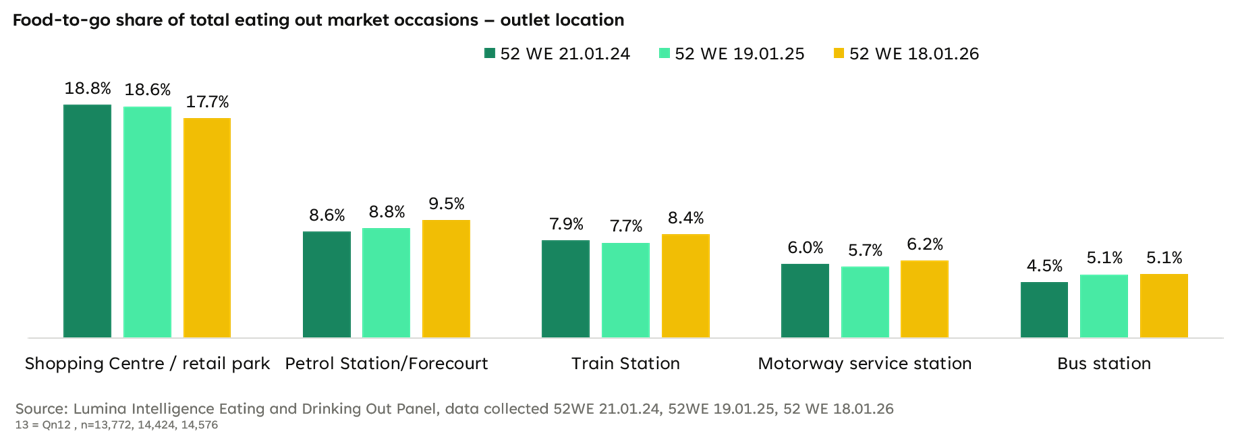
Food-to-go has become one of the most important elements of the travel hub proposition.
Consumers are increasingly seeking fresh, high-quality food and drink options when travelling, whether for a morning commute, a business trip or a leisure journey. Rather than settling for basic grab-and-go purchases, many are looking for products that match the quality standards they expect elsewhere.
This has encouraged operators to expand beyond traditional sandwiches and snacks, introducing a broader range of meal solutions, hot food, premium coffee and healthier options.
The result is that foodservice is becoming a destination driver in its own right, helping travel hubs attract visitors and increase dwell time.
Forecourts Are Evolving Beyond Fuel
While the trend can be seen across travel locations, it is particularly evident in the forecourt sector.
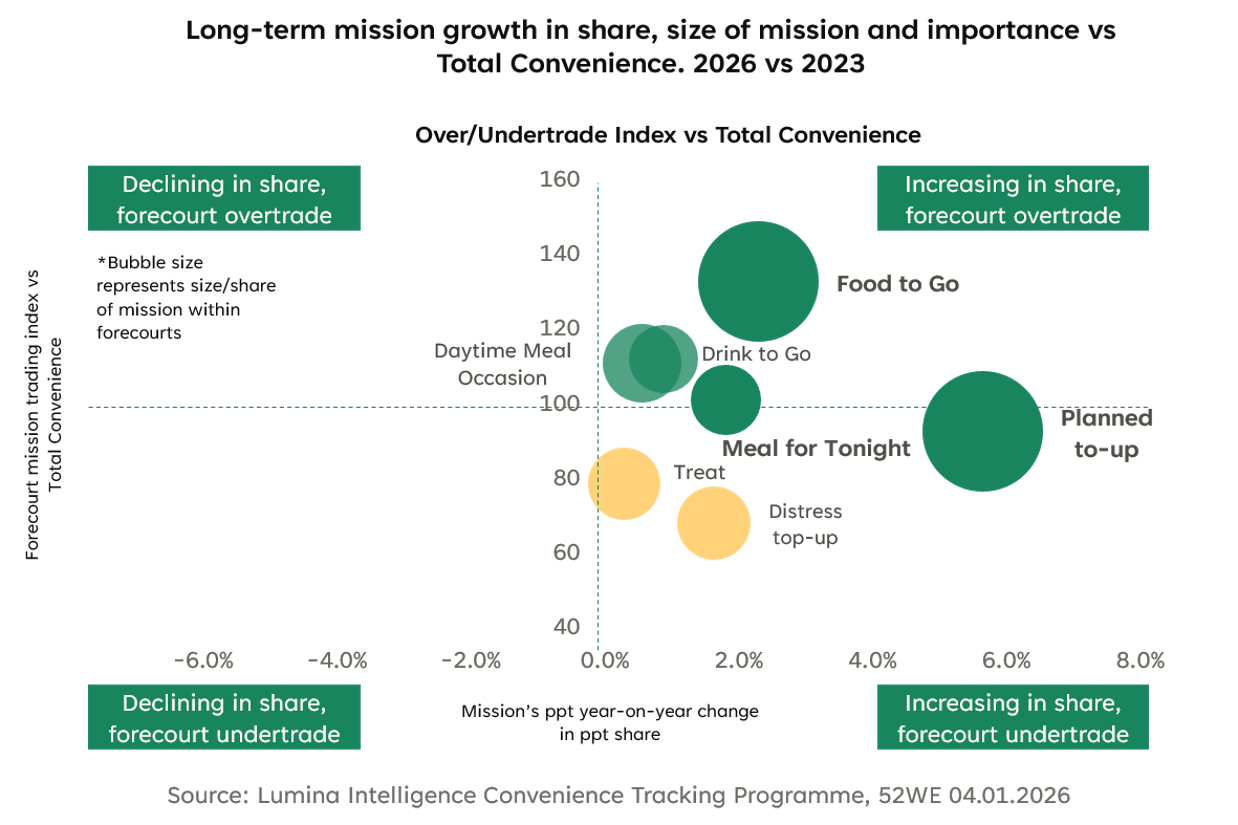
Historically viewed primarily as places to refuel vehicles, forecourts are increasingly positioning themselves as multi-purpose destinations. Food-to-go, coffee and convenience retail now play a central role in attracting customers and generating repeat visits.
Many forecourt operators are investing in upgraded foodservice offers, recognising that consumers increasingly expect high-quality food and drink alongside traditional services. Branded foodservice partnerships, premium coffee offers and expanded convenience ranges have become important ways of differentiating sites.
As a result, the modern forecourt is becoming less about fuel and more about the overall customer experience.
Consumers Want Multiple Services in One Location
Travel hubs are also benefiting from growing demand for one-stop convenience.
Consumers increasingly value locations that allow them to complete multiple tasks during a single visit. Across travel hubs, operators are broadening their offer beyond food and drink. Railway stations are combining retail, dining and convenience services for commuters, while airports and motorway locations continue to expand dining and shopping options. Forecourts are differentiating through services such as parcel collection, click-and-collect and EV charging.
For operators, these additional services create more reasons to visit and help increase the time customers spend on site. Longer dwell times can in turn create additional opportunities for foodservice and retail purchases.
The trend reflects a broader expectation that travel hubs should support a range of everyday needs rather than serving a single purpose.
Health and Quality Are Becoming Increasingly Important
Health is also becoming a more significant consideration within food-to-go.
Consumers are showing growing interest in fresh ingredients, balanced meals, high-protein products and healthier beverage options. This is influencing the types of products that perform well within travel locations and encouraging operators to broaden their ranges.
Quality perceptions are similarly important. Consumers increasingly expect food purchased in a travel hub to match the standards they encounter in cafés, quick-service restaurants and other foodservice venues.
For operators, this means investing not only in convenience but also in product quality, freshness and choice.
The Future of Travel Hubs
The lines between convenience retail, foodservice and travel retail are becoming increasingly blurred.
Whether travelling through a railway station, airport, motorway service area or forecourt, consumers now expect access to quality food and drink, convenient shopping, useful services and an efficient customer experience in one location.
Combining these elements might be the recipe for success for those operators looking forward to positioning themselves as destinations, rather than simple stopping points.

These insights have been powered by the following Lumina Intelligence Reports:
Forecourt Market Report 2026 A comprehensive overview of the a market undergoing rapid transformation as forecourts evolve from purely fuel‑led sites to diverse retail, food‑to‑go, and service hubs.
Food to Go Market Report 2026 A wide view of a sector navigating cost pressures, evolving consumer routines and sustained demand for convenience.
FAQs
What is a travel hub in foodservice and convenience retail?
A travel hub is a location where consumers pass through as part of a journey and can access food, drink, retail and other services. This includes forecourts, railway stations, airports, motorway service areas and other transport-linked destinations.
Why are travel hubs becoming more important for foodservice?
Travel hubs bring together consumers who often have immediate food and drink needs. As expectations around quality and convenience have increased, operators have expanded their foodservice offers, making these locations important channels for food-to-go and on-the-move consumption.
How are forecourts changing?
Forecourts are evolving beyond fuel retail. Many now offer premium coffee, food-to-go, convenience retail, parcel collection, EV charging and other services, positioning themselves as broader customer destinations.
What do consumers want from travel hub foodservice?
Consumers are increasingly looking for quality, freshness, speed and convenience. Demand for premium coffee, healthier options and freshly prepared food has influenced the development of travel hub foodservice offers.
What role does convenience play in travel hubs?
Convenience remains central, but consumers increasingly expect multiple services in one location. Travel hubs are becoming places where people can eat, shop, collect parcels and access transport-related services within a single visit.
Why are branded foodservice offers common in travel hubs?
Recognised foodservice brands can provide reassurance around quality, consistency and value, helping attract customers and drive repeat visitation.
What opportunities do travel hubs create for food and drink brands?
Travel hubs provide access to consumers during multiple occasions throughout the day, including breakfast, lunch, snacking and evening missions, making them attractive locations for foodservice expansion.