

In the last year, GLP-1 medications have changed how consumers approach food and drink.
Headlines often focused on reduced appetite, which impacts all eating occasions, but out-of-home the most, as diners will be faced with standard servings that are larger than their stomachs.
However, operators can turn this around in order to unveil a real opportunity for hospitality, adapting menus so they can offer portions that better match changing consumer habits.
GLP-1 Users Want Less Food, Not Fewer Dining Occasions
Much of the discussion around GLP-1 has focused on the impact of appetite reduction, but how are consumers thinking about how they participate in out-of-home occasions?
Rather than abandoning eating out altogether, GLP-1 users are increasingly looking for formats that better align with reduced appetites. Consumer feedback tracked by Lumina Intelligence’s Out-of-home GLP-1 Navigator points to behaviours such as choosing starters over mains, sharing dishes, or seeking smaller meals that still allow them to take part in social dining occasions.
This distinction is important for operators. The opportunity is not necessarily to replace dining occasions that have been lost, but to ensure menus remain relevant to consumers whose appetites have changed. As more people adopt GLP-1 medications, success may depend on making it easier for guests to enjoy the same occasions through portions and formats that feel appropriate to their needs.
As more people adopt GLP-1 medications, the key challenge lies within ensuring the traditional menu structure evolves alongside changing eating habits.
Smaller Plates Can Protect Spend and Satisfaction
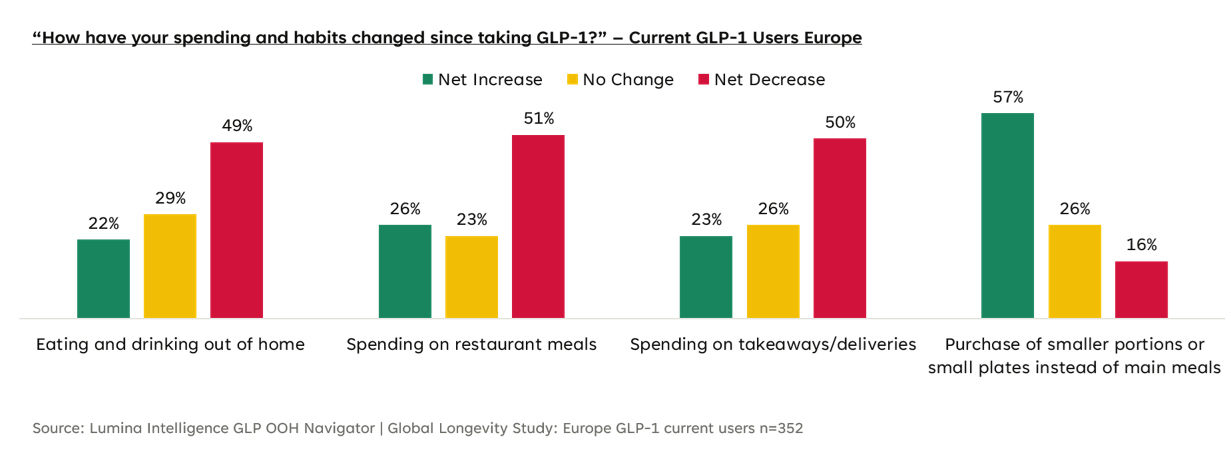
Among current GLP-1 users, 57% report increasing their purchase of smaller portions or small plates instead of main meals.
These smaller servings can improve perceived value while helping consumers avoid paying for food they know they are unlikely to finish. They can also reduce concerns around waste and the pressure to take leftovers home.
For operators, this does not necessarily mean lower spend. Instead, it presents an opportunity to rethink menu structures around flexibility and choice. Small plates, half portions and premium sharing formats can help businesses better align with changing consumer expectations while maintaining the quality and experience diners continue to seek when eating out.
Rethinking Menu Design for the GLP-1 Consumer
Some operators have already begun adapting their menus to better accommodate changing appetites. Rather than simply reducing portions, brands are introducing formats that give consumers more flexibility over how much they order while maintaining choice and value.
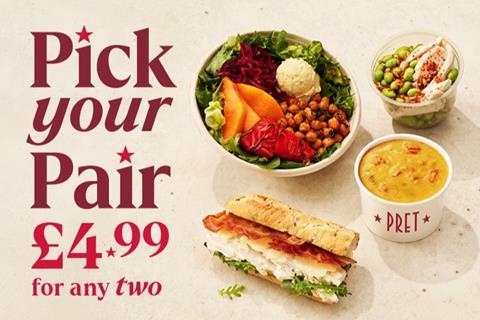
Pret has expanded its range of half-sized sandwiches and meal combinations through its “Pick Your Pair” offer, allowing customers to build a lighter meal from smaller components. Similarly, itsu has introduced smaller “little” versions of selected dishes, providing an alternative to traditional main-sized portions.
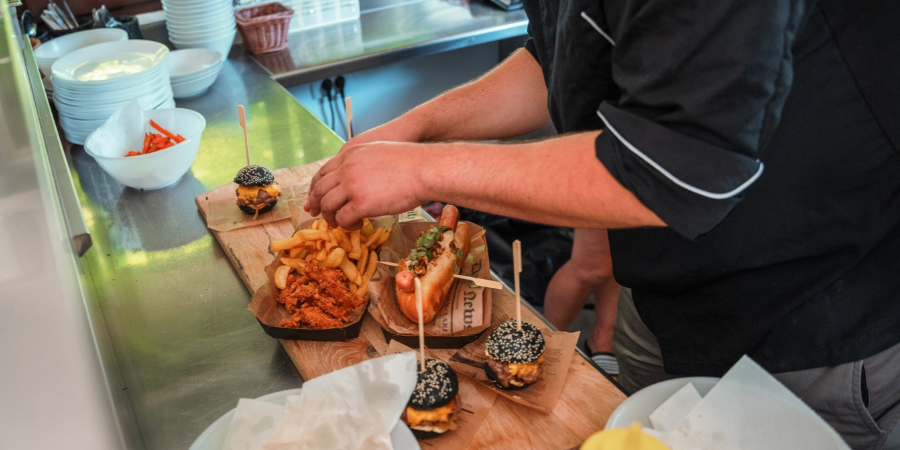
Elsewhere, burger operators have embraced slider-style formats that allow customers to enjoy the full menu experience without committing to a larger meal. Examples highlighted in the report include Burger King and Honest Burger, whose smaller-format offerings demonstrate how reduced portions can be positioned as variety and choice rather than compromise.
Conclusion
The Out-of-home market can adapt to these changing consumer behaviours, turning challenges into opportunities, as long as it remains flexible.
There’s no stopping the advance of GLP-1 usage, which means that menu engineering will have potentially more moving parts. Those operators willing to play and innovate can stay ahead and retain those dining occasions.

These insights have been powered by Lumina Intelligence’s OOH GLP-1 Navigator.
The definitive source of insight into how GLP-1 medications are influencing out-of-home food and drink behaviour. Combining consumer research, operator analysis and commercial recommendations, the platform helps hospitality, foodservice and retail businesses understand changing consumption habits and identify opportunities for growth.
FAQs
What are GLP-1 medications?
GLP-1 medications are drugs originally developed to support diabetes management and weight loss. Their appetite-suppressing effects are increasingly influencing food and drink consumption habits.
How are GLP-1 users changing their eating-out behaviour?
Many GLP-1 users are seeking portion sizes that better match reduced appetites, with increased demand for smaller portions, small plates and lighter meal options.
Will GLP-1 reduce hospitality spending?
Not necessarily. While consumers may eat less, operators can protect spend through smaller-format dishes, premium ingredients and flexible menu options.
Why are smaller portions becoming more important?
Smaller portions help consumers manage reduced appetites, minimise food waste and avoid paying for food they are unlikely to finish.
How can hospitality operators respond to GLP-1 trends?
Operators can introduce half portions, small plates, sharing formats and mix-and-match meal options that provide greater flexibility and choice.
Which hospitality brands are already adapting?
The report highlights examples including Pret, itsu, Burger King and Honest Burger, all of which have introduced smaller-format menu options to better suit changing consumer needs.