

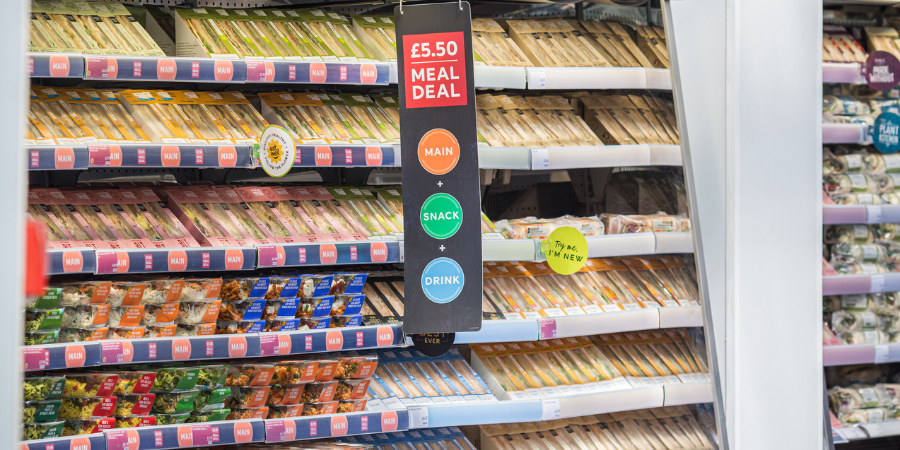
Lumina Intelligence’s research on the Food to Go market highlights how meal deals have evolved into a sophisticated pricing and value mechanic, used by supermarkets, convenience retailers and QSRs to compete for lunchtime occasions, manage inflation, and drive higher customer spend.
This transformation is happening within a fast-growing but increasingly polarised market. The UK food-to-go sector is forecast to reach £24.9bn in 2026 (+3.4% YoY), with growth driven primarily by higher spend per visit rather than new consumers.
As a result, meal deals now sit at the intersection of pricing strategy, value perception and premiumisation, making them one of the most important tools in modern food-to-go retail.
Why Meal Deals Matter More Than Ever
Meal deals have long been a cornerstone of UK food-to-go. Today, however, their importance has intensified due to structural market shifts:
- Rising operational costs and sustained food inflation
- Hybrid working patterns, concentrating demand into weekday lunch occasions
- Changing consumer expectations, with quality overtaking value as the primary decision driver
At the same time, consumers are moving towards complete meal solutions, with more people purchasing both food and drink together, reinforcing the relevance of bundled offers.
What Is a Meal Deal?
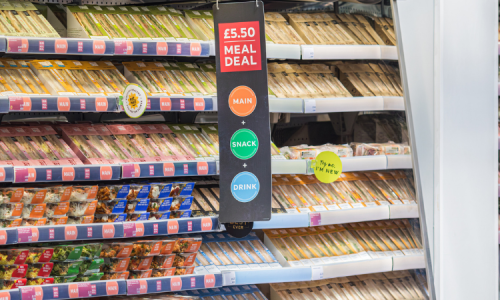
A meal deal is a bundled food-to-go offer, typically including a main, a drink and sometimes a snack. However, its role has expanded significantly. Modern meal deals:
- Deliver speed and convenience
- Anchor price expectations in a cost-conscious market
- Encourage trade-up through premium tiers and add-ons
Rather than acting purely as a discount mechanic, they now function as a strategic pricing architecture.
Convergence Across Food-to-Go
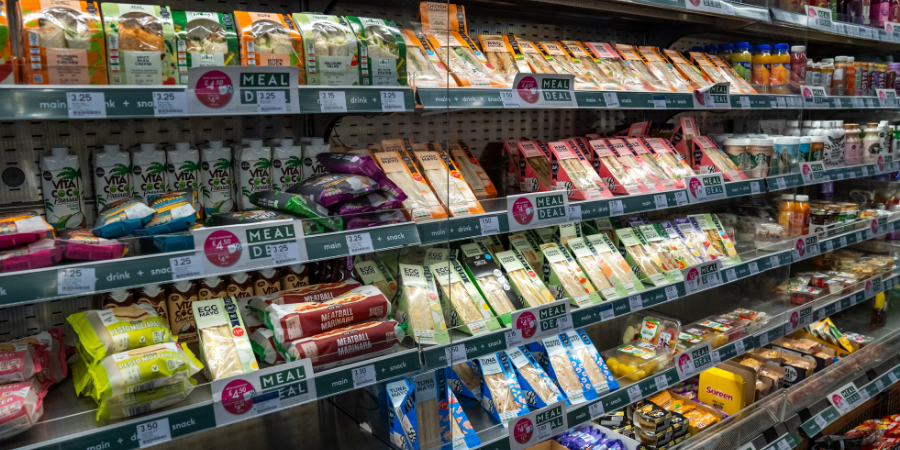
Nowadays, all food-to-go channels compete for the same lunchtime mission, as meal deals have ceased to be confined to supermarkets.
- Supermarkets still act as pricing architects, setting market anchors
- However, convenience stores win on speed, proximity and frequency
- QSR operators use meal deals to defend value perception and capture lunch traffic
Consumers increasingly compare offers across formats, not within a single channel, intensifying competition.
Core Meal Deal Trends Shaping the Market
The Shift to Tiered Pricing Structures
One of the most significant shifts in the meal deal landscape is the move away from fixed, single price points toward more flexible, tiered pricing models. Historically, meal deals operated as a simple, uniform value proposition, but operators are now building more dynamic pricing architectures that can cater to different budgets, needs and occasions.
Standard meal deals continue to play a crucial role as the accessible entry point, typically anchored around familiar price thresholds. These serve to reassure price-sensitive consumers and maintain frequency. However, the real evolution is happening above this base level, where premium tiers are expanding and becoming more clearly defined.
This approach reflects a broader move toward “barbell pricing”, where operators deliberately design both ends of the value spectrum:
- A core, entry-level offer that maintains accessibility and volume
- Premium tiers that drive trade-up and higher basket spend
- Structured upgrades through add-ons, better mains or enhanced drinks
Rather than relying on headline price increases, operators are using range design, bundling and portion engineering to manage costs while protecting perceived value.
The Rapid Growth of Premium Meal Deals
Premiumisation has become a defining feature of the modern meal deal. As consumers place greater emphasis on quality, food-to-go is no longer viewed as purely functional, but as an opportunity to enjoy a satisfying and even indulgent break within the day.
This shift is particularly evident among higher-income consumers, who are increasingly using meal deals as a way to “trade down” from restaurants without compromising on quality. In response, operators are investing in meal deals that feel more elevated, combining convenience with stronger signals of quality and differentiation.
These premium offers typically succeed when they incorporate:
- Restaurant-quality ingredients or flavours
- Clear health or functional benefits (e.g. high protein, high fibre)
- More substantial or hot meal components that increase satiety
The result is a tier of meal deals that command higher prices while still being perceived as strong value, not because they are cheap, but because they deliver more.
Lunch as the Decisive Occasion
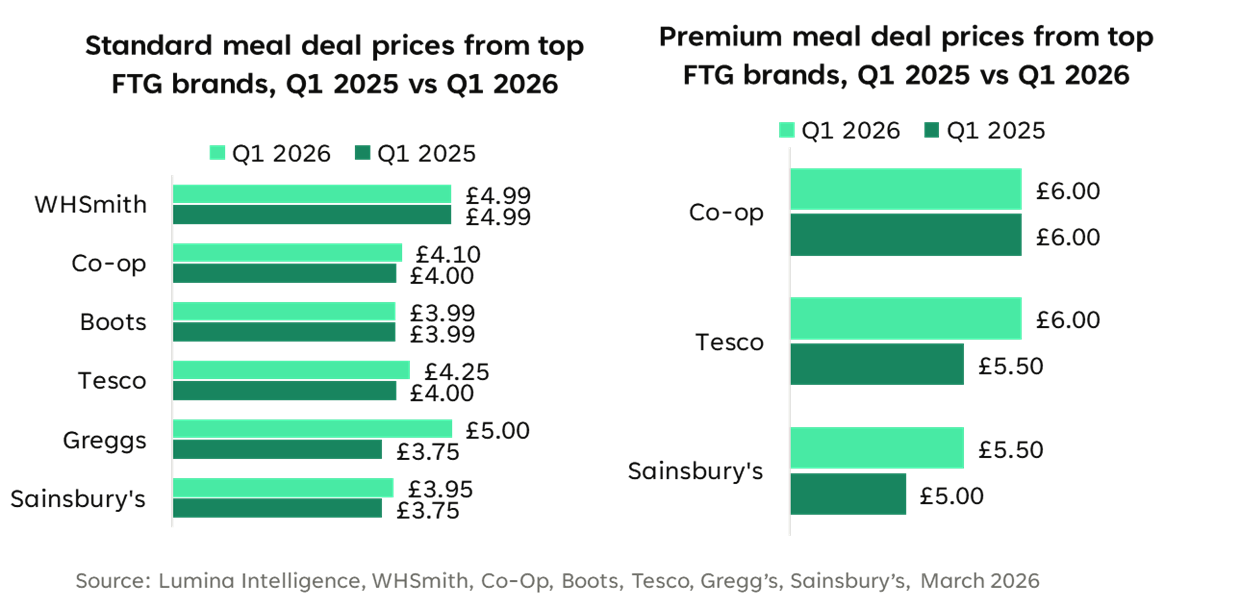
Lunch has firmly established itself as the battleground for meal deal competition, shaping how offers are structured, priced and communicated. As hybrid working patterns settle, demand has become more concentrated around core weekday lunch occasions, particularly in cities and commuter hubs.
Consumers are also approaching lunch more intentionally, increasingly seeking complete meal solutions that feel balanced, filling and worthwhile. This has reinforced the importance of the classic bundled format, while raising expectations around what that bundle delivers.
As a result, successful meal deals are designed to deliver convenience and speed for time-pressed workers, while also providing enough satiety and balance to feel like a complete meal and incorporating clear quality cues that align with rising lunchtime expectations.
With many lunch occasions taken alone, the meal deal must also deliver a sense of personal reward, not just functionality.
A Redefinition of Value
While meal deals remain rooted in value, the meaning of value has shifted significantly. Price is no longer the sole or even primary consideration; instead, consumers are evaluating whether a meal feels “worth it” based on a combination of factors.
This means that a higher-priced meal deal can still resonate strongly if it clearly delivers on expectations. In fact, consumers are increasingly willing to pay more when they perceive genuine benefits in return.
Today’s definition of value is shaped by a broader set of criteria:
- Quality of ingredients and freshness
- Fairness and transparency of pricing
- Satisfaction, portion size and overall experience
This evolution reflects a wider shift in mindset, where quality and health are becoming central to decision-making. For operators, the challenge is to create meal deals that justify their price point through clear, tangible value.
Pricing: What Has Changed?
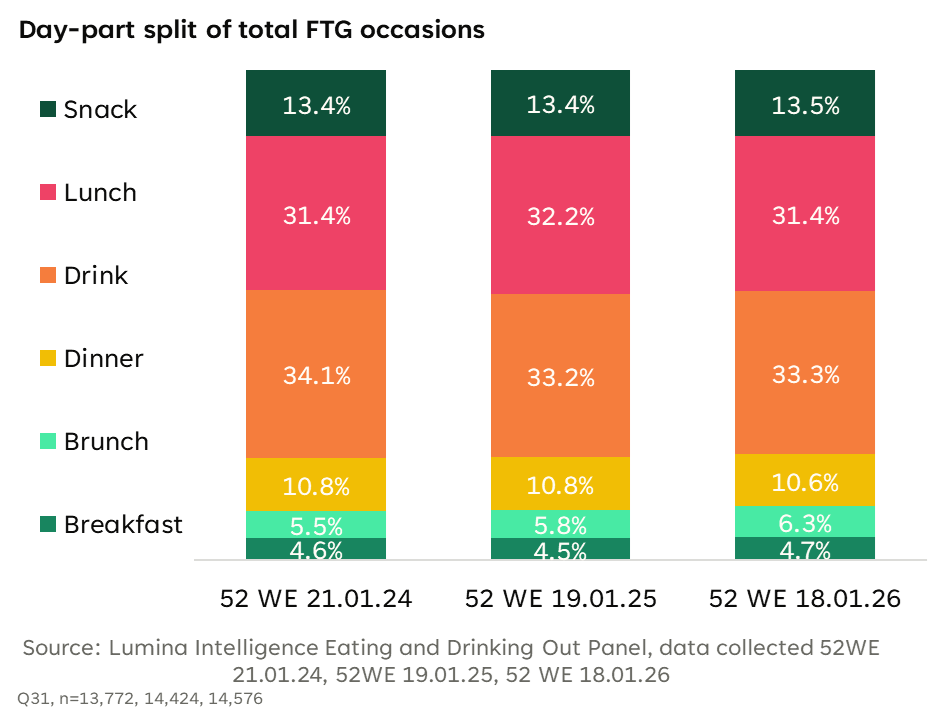
Standard meal deal price anchors have largely held, while premium tiers have expanded upwards. Operators increasingly rely on range design, bundling and portioning rather than blunt price increases to manage cost pressure.
At the same time, there is limited headroom for price increases, with most meal deals clustered within the £5–£10 range across the market.
Value vs Premium
Both segments are critical: value meal deals remain essential for accessibility and reassurance, while premium meal deals are delivering disproportionate growth in spend. The most successful strategies engineer both within a single pricing architecture.
How Consumer Behaviour Is Driving Change
Growth in the food-to-go market is increasingly being driven by rising spend per visit rather than an expansion in the number of consumers. The average spend has climbed to £12.98, up +8.5% year-on-year, reflecting a clear shift towards higher basket values. This uplift is being fuelled by consumers trading up within categories and adding more items to their purchases, rather than visiting more frequently. In this context, meal deals play a key role by naturally encouraging these behaviours through bundled offers and built-in upsell opportunities.
At the same time, consumer missions are evolving, with a noticeable move towards more complete meal purchases. Shoppers are increasingly opting to buy both food and drink as part of a single transaction, and meal deals align perfectly with this behaviour.
Aside from functionality, there is also a growing emphasis on treating and enjoyment within food-to-go occasions. Treat-led missions remain a significant driver of demand, while “winding down or relaxing” has emerged as the fastest-growing motivation. As a result, meal deals are transitioning into offers that also deliver enjoyment, satisfaction and a sense of reward, beyond their convenience.
What These Trends Mean for Operators
Taken together, these shifts signal that meal deals should no longer be treated as short-term promotional tools, but as a central pillar of pricing and proposition strategy.
Further key takeaways for operators:
- Build tiered pricing architectures that balance value entry points with premium upsell
- Focus on lunchtime missions, where demand and spend are most concentrated
- Use quality, health and satiety cues to redefine value beyond price
- Leverage meal deals to increase basket size through add-ons and bundled purchases
About the data
These insights have been powered by Lumina Intelligence’s Meal Deal Monitor, a continuous, data‑led view of how meal deals are priced, built and performing across retail and foodservice – connecting real shopper behaviour with real‑world execution.
3,000 consumer interviews per quarter capturing missions, frequency, trade-up and the drivers of value perception.
What are the main meal deal trends in the UK?
The main meal deal trends in the UK are tiered pricing, premiumisation, and a stronger focus on lunchtime occasions. Operators are moving away from single-price bundles and instead offering multiple price tiers, including premium meal deals that drive higher spend. At the same time, consumers are prioritising quality, health and satisfaction, which is reshaping how value is defined.
How much do meal deals cost in the UK?
Standard meal deals in the UK typically cost between £4 and £5, while premium meal deals range from £6 to £10 or more. Most operators maintain entry-level price points to remain competitive, while using premium options, upgrades and add-ons to increase average spend.
Why are premium meal deals growing so quickly?
Premium meal deals are growing because consumers are increasingly willing to pay more for higher-quality food-to-go options. Demand is being driven by restaurant-quality ingredients, functional health benefits such as high-protein or high-fibre meals, and the desire for more satisfying and enjoyable lunch experiences.
Are meal deals still about value for money?
Yes, meal deals are still about value, but the definition of value has changed. Consumers now evaluate value based on quality, fairness of pricing, portion size and overall satisfaction, rather than simply looking for the lowest price. This means higher-priced meal deals can still perform well if they deliver clear benefits.
Why is lunch so important for meal deals?
Lunch is the most important occasion for meal deals because it drives the highest volume and spend in food-to-go. Consumers are increasingly looking for complete, convenient and satisfying lunch solutions, making meal deals a natural fit for this mission.
How are supermarkets, convenience stores and QSRs using meal deals differently?
Supermarkets typically act as price leaders, setting the benchmark for standard meal deal pricing. Convenience stores focus on speed and accessibility, using meal deals to drive frequency. QSR operators use meal deals to compete on value perception and attract lunchtime traffic with more premium or hot food options.
What is driving growth in the food-to-go and meal deal market?
Growth in food-to-go and meal deals is primarily driven by higher spend per visit rather than more customers. Consumers are trading up to premium options, adding drinks and sides, and treating food-to-go as a more intentional and experience-led purchase.