

Health led food to go trends are reshaping menus across the UK, as consumers increasingly seek functional benefits, cleaner labels and nutrient dense formats alongside convenience.
Food to go has shown resilience in a challenging economic climate. Consumer confidence remains subdued and spending decisions are cautious, yet penetration and frequency continue to rise. The channel now accounts for close to a quarter of all eating out occasions, supported by the return to office working and the growing role of food to go as a moment of pause in busy working days.
Within this context, health has become a powerful driver of choice. Shoppers expect food to go menus to deliver quality, reassurance and wellbeing, with less tolerance for compromise on ingredients or format.
Health priorities reach mass adoption
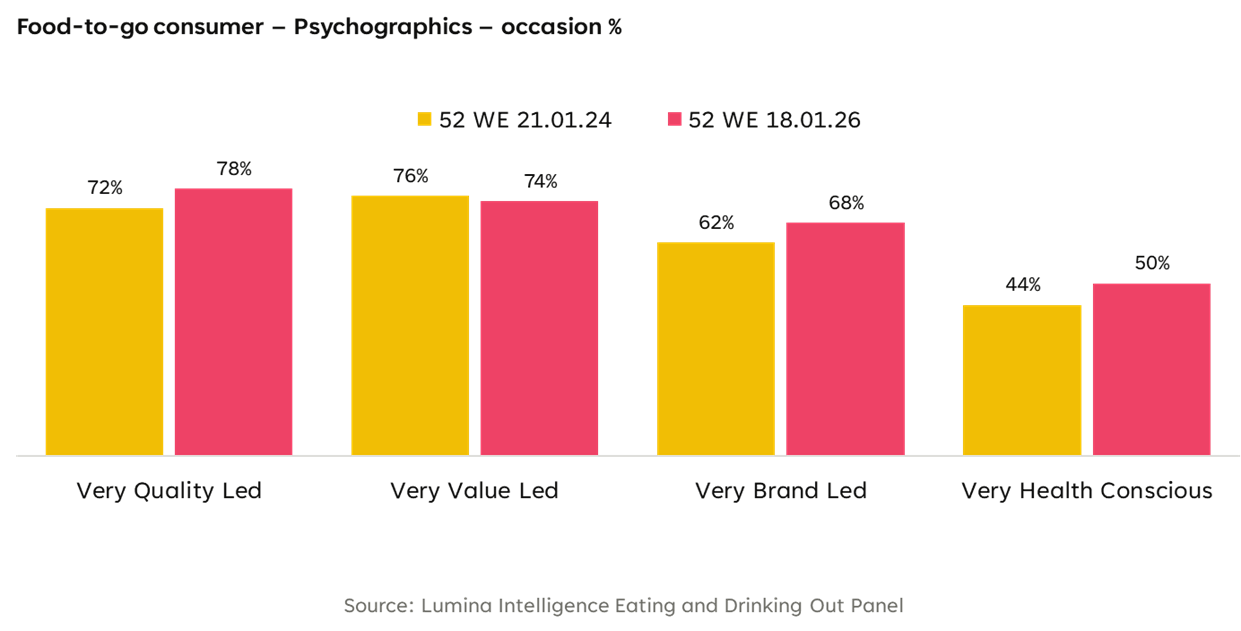
Health led behaviour is firmly embedded in mainstream consumer behaviour. Three quarters of shoppers say they actively buy foods with added benefits, while health motivated consumers continue to grow year on year. Decisions are increasingly influenced by nutritional contribution, ingredient transparency and perceived long term benefits.
At the same time, avoidance behaviours are becoming more visible. Ultra processed foods are under greater scrutiny, with more than half of consumers trying to avoid some or all UPFs and over 40% saying their perception of them has changed within the past year. Social media has played a key role in accelerating this shift, amplifying conversations around processing, additives and ingredient familiarity.
For food to go operators, this places greater emphasis on clear ingredient stories, recognisable components and health cues that are easy to understand at speed.
Fibre builds momentum as a functional focus
Protein remains well established across food to go menus, though attention is broadening to other functional nutrients. Fibre is gaining visibility and relevance, supported by both health education and changing eating behaviours.
Use of GLP 1 appetite suppressants is contributing to this shift. Around 5% of UK consumers are already using these medications, with a further 10% considering it. Reduced appetite places greater importance on satiety and nutritional efficiency, increasing demand for meals that deliver fibre, protein and micronutrients in smaller portions.
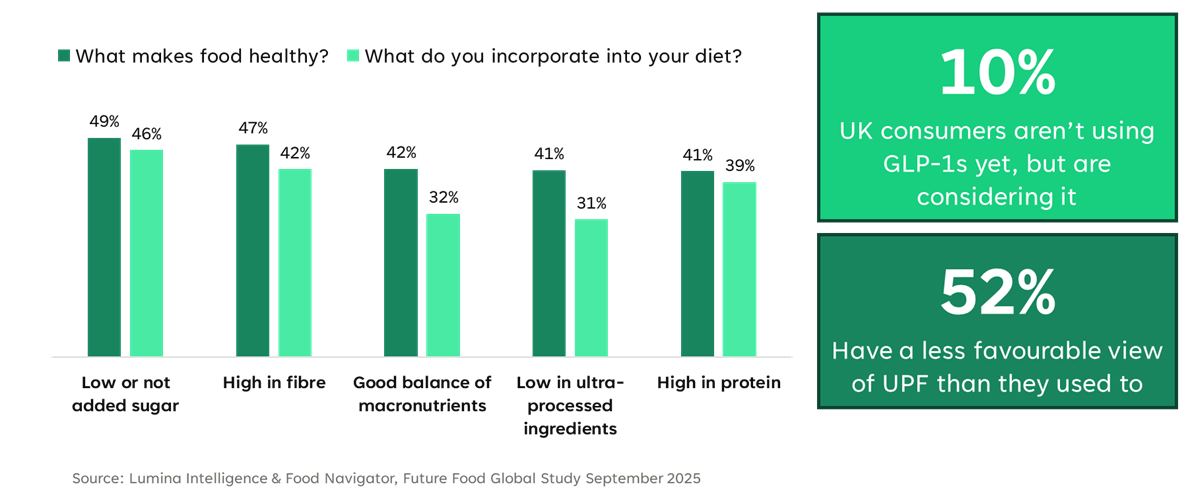
This momentum is visible beyond clinical use. Fibre has overtaken omega 3 and collagen as the most desired functional claim, and social media engagement reflects widespread interest, with “fibre maxxing” achieving mass market reach. Over time, fibre looks set to play a more prominent role in menu descriptors, on pack messaging and product design.
Clean label cues strengthen their influence
Rising awareness around UPFs is reinforcing demand for food first cues. Consumers are paying closer attention to ingredient lists and gravitating towards dishes that feel simple, familiar and grounded in whole foods. Vegetable forward options and naturally nutrient dense recipes are resonating, while interest in heavily processed substitutes has softened.
In food to go settings, trust and reassurance are important decision drivers. Recognisable brands, clear ingredient narratives and visible health credentials provide confidence when time is limited and choices are made quickly. Health, brand and quality are increasingly intertwined, shaping perceptions of value as well as wellbeing.
Functional drinks and the expanding role of coffee and tea
Beverages are playing a growing role in how health is expressed on food to go menus. Traditional soft drinks continue to lose share, while coffee, tea and functional beverages gain visibility across multiple dayparts.
Operators are leveraging café style innovation to broaden appeal. Iced matcha and chai, kefir based drinks, mushroom lattes and wellness infusions now sit alongside fortified serves positioned around energy, focus and cognitive support. These drinks support morning and mid afternoon missions, where function and enjoyment intersect.
Texture and layering add further appeal, with foams, mousses and dessert inspired flavours helping drinks deliver both satisfaction and perceived indulgence, without moving away from health led positioning.
Food to go evolves towards quality, flexibility and function
Food to go is increasingly treated as a considered meal choice rather than a purely functional purchase. Product development reflects this shift, with growth in all day formats, premium price points and portion flex designs.
All day items have gained share as eating patterns become more fluid. Products priced above £4 are also growing, supported by consumers seeing food to go as equivalent to a “proper” meal. Portion flex formats respond to changing appetites while maintaining nutritional value.
Recent launches underline this direction. Pret’s half baguettes offer a lighter format without losing lunchtime relevance. Itsu’s Katsu Bowls position between a side and a main at a key £5 price point. M&S Simply Food’s Nutrient Dense range combines fibre and micronutrients with balanced portions, drawing on British Nutrition Foundation expertise.
Across these examples, flavour concentration and nutrition take priority over sheer volume.
Implications for menus and ranges
Several clear principles emerge for food to go menu strategy:
- Smaller portions benefit from higher nutritional density, pairing protein and fibre with bold, satisfying flavours.
- Functional benefits resonate most when communicated clearly and supported by familiar ingredients.
- Coffee and tea menus offer opportunities to layer health, premiumisation and daypart expansion.
- Premium food to go performs well when value is signposted through quality cues, global flavours and flexible formats.
Health as reassurance in everyday choices
Health now functions as a lens through which quality, trust and value are assessed in food to go. For consumers navigating busy schedules and cautious spending, products that feel supportive, balanced and enjoyable continue to hold appeal.
Food to go menus that combine function, flavour and familiarity are well placed to remain relevant as health expectations evolve further. The shift towards functional, fresh and feel good choices is shaping the next phase of growth across the channel.
These insights have been powered by Lumina Intelligence’s global quantitative online survey, commissioned exclusively for Food Navigator. Fieldwork was completed in July 2025, capturing the views of 9,500 consumers across 13 countries: Australia, China, France, Germany, India, Italy, Japan, Malaysia, Singapore, South Korea, Spain, the UK, and the USA.
These insights have been powered by the Lumina Intelligence UK Food to Go Market Report 2026. The report delivers a comprehensive view of a sector navigating cost pressures, evolving consumer routines and sustained demand for convenience.
FAQs: Health shifts reshaping food to go menus
What health trends are currently shaping food to go menus?
Food to go menus are being shaped by stronger demand for added benefits, cleaner labels and nutrient dense formats. Consumers are actively seeking foods that support wellbeing, with particular interest in fibre, protein, functional ingredients and recognisable, whole food components. Beverage menus are also evolving, with coffee, tea and functional drinks gaining share.
Why is fibre becoming more important in food to go?
Fibre is gaining traction due to rising awareness of its role in satiety, digestive health and overall nutrition. Changing eating behaviours, including smaller appetites and more flexible meal patterns, have increased the appeal of fibre rich food to go options that deliver fullness and balance within reduced portions. Social media has helped accelerate this shift into the mainstream.
How is concern about ultra processed foods affecting food to go?
Heightened awareness of ultra processed foods has increased consumer scrutiny of ingredients and processing cues. Shoppers are paying closer attention to ingredient lists and gravitating towards dishes that feel simple, familiar and food first. For food to go operators, this places greater emphasis on clean label cues, whole foods and clear product stories.
What role does GLP 1 usage play in food to go innovation?
Growing use of GLP 1 appetite suppressants is influencing product design, particularly around portion size and nutritional density. Reduced appetite increases the importance of meals that deliver fibre, protein and micronutrients efficiently. This has accelerated interest in smaller, balanced portions within food to go ranges that still feel satisfying and complete.
Why are coffee, tea and functional drinks growing within food to go?
Coffee, tea and functional beverages are gaining prominence as consumers look for drinks that offer both enjoyment and perceived benefits. Café style innovation, functional positioning and texture led serves are helping beverages play a wider role across morning and afternoon occasions, while traditional soft drinks continue to lose relevance.
Is premiumisation still working in food to go?
Premiumisation continues to resonate when value is clearly justified. Food to go shoppers increasingly associate value with quality, ingredients and health credentials rather than price alone. All day formats, globally inspired flavours and nutrient dense recipes are helping premium food to go offerings feel considered and worth the spend.
How are portion sizes changing in food to go?
Portion formats are becoming more flexible in response to changing appetites and eating patterns. Smaller portions designed around nutritional density allow consumers to meet health needs without over consumption. This approach supports a wider range of missions, from lighter lunches to structured snacking.
What does this mean for food to go menu development?
Menus that perform well balance function, flavour and familiarity. Priorities include clear communication of benefits, recognisable ingredients, thoughtful portioning and strong beverage offers. Health led innovation that feels accessible and credible is increasingly central to food to go menu strategy.