

UK forecourts are undergoing a pivotal shift in 2026, driven by pressure on fuel margins, rising operating costs and regulatory headwinds. According to Lumina Intelligence’s Forecourt Market Report 2026, 44% of operators now describe the trading environment as challenging or extremely challenging. As a result, forecourts are being repositioned as food-led, service-driven retail destinations rather than fuel-only stops.
The biggest trends transforming UK forecourt retail in 2026
- Rapid growth in food to go, driven by quality hot food, coffee and branded concessions that deliver strong impulse spend and repeat visits.
- Expansion of fresh and chilled ranges as forecourts increasingly capture planned top‑up and meal‑solution missions.
- Rising importance of digital touchpoints, including pump‑handle media, in‑store screens, electronic shelf‑edge labels and mobile engagement.
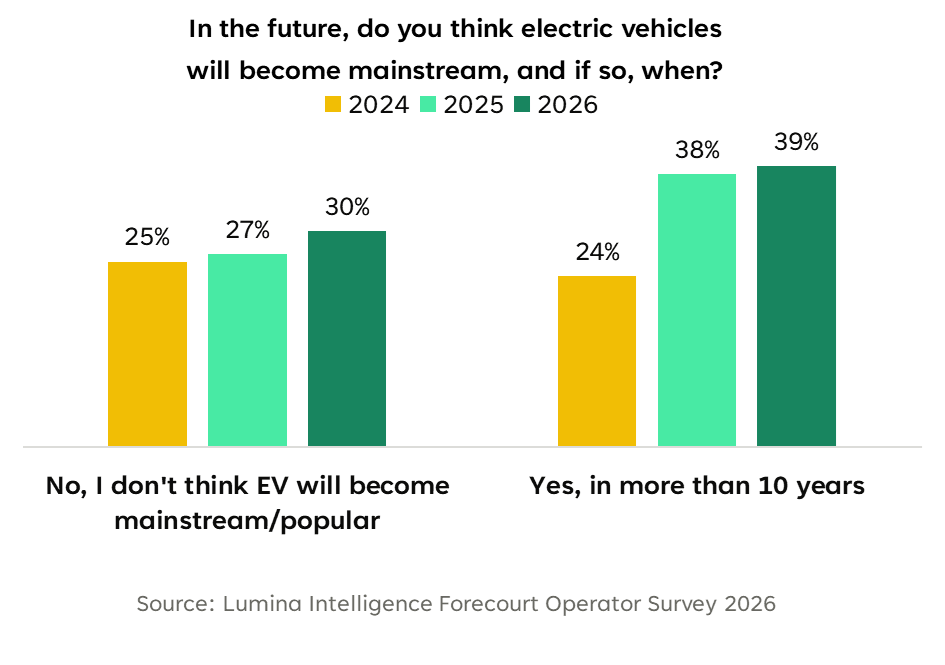
- A gradual but meaningful shift towards EV and hybrid demand, extending dwell time and changing the economics of the forecourt visit.
- Growth in services such as parcel lockers, car washes, drive‑thrus and laundromats, helping to replace declining footfall from legacy categories.
- Stronger demand for healthier, fresher and more functional food, particularly within food‑to‑go and chilled missions.
Why is food to go so important for forecourts in 2026?
Food to go has emerged as the most powerful growth engine in UK forecourts and continues to outperform wider convenience. It attracts commuters, tradespeople and time‑poor shoppers throughout the day and is increasingly the reason shoppers choose one forecourt over another.
Around one third of food‑to‑go purchases in forecourts are made on impulse, highlighting the importance of strong front‑of‑store placement, clear meal deals and compelling value cues. Branded partnerships such as Greggs, Costa and Subway remain critical in building trust and driving conversion, particularly for hot food and coffee.
Operator confidence reflects this momentum: 84% of operators say food to go will be extremely or very important to their store over the next five years. As competition intensifies, quality, consistency and speed of service are becoming decisive differentiators.
What’s driving the rise in fresh and chilled products in forecourts
Fresh and chilled have become central to the evolution of the forecourt from distress purchase to planned destination. These categories are now among the top drivers of store choice, particularly for families and repeat visitors.
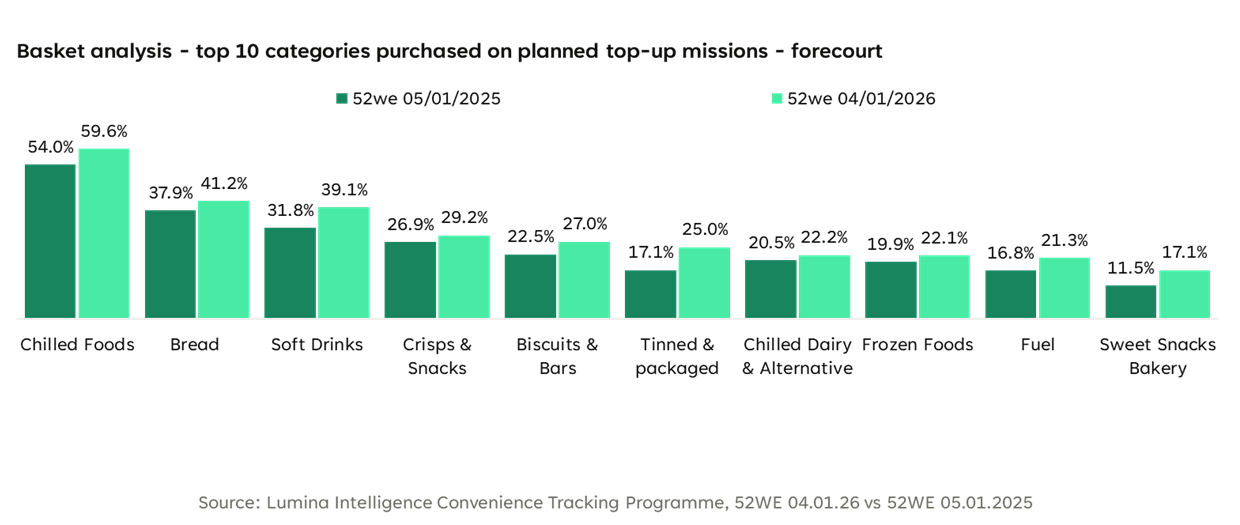
Planned top‑up missions now account for more than one in four forecourt visits and deliver significantly higher value than the average trip. Planned top‑up baskets average 4.5 items, compared with 3.1 items for the forecourt average, underlining the commercial importance of investing in range, availability and presentation.
Families are key to this growth, accounting for 62% of planned top‑up shoppers, while chilled food is purchased on close to 60% of these trips. Shoppers are looking for reliable fresh produce, chilled ready meals, bakery items and healthier options, with provenance and trust playing an increasingly important role.
How is shopper behaviour evolving in the forecourt channel?
Forecourt shoppers are increasingly combining missions, using sites not only for refuelling but also for food‑to‑go, top‑up shopping and quick meal solutions. While fuel price sensitivity remains high, in‑store behaviour is becoming more quality‑led, convenience‑focused and brand‑driven.
Time‑poor shoppers are leaning into forecourts for immediate meal and food solutions that sit between traditional convenience and foodservice. This is influencing ranging, merchandising and the growing focus on freshness, visibility and speed without fundamentally changing the role of the forecourt as a convenience‑led channel.
How are forecourts adapting for the future?
Operators are increasingly rethinking the forecourt as a multi‑need destination rather than a fuel‑only stop. Digital tools, onsite services and emerging vehicle technologies are all playing a role in shaping this evolution, although adoption remains uneven across the channel.
Services such as car washes, parcel lockers and drive‑thrus are becoming more prominent as alternative traffic drivers, while digital touchpoints, from in‑store screens to pump‑side media, offer opportunities to increase engagement and conversion. At the same time, the gradual shift towards EVs is beginning to influence dwell time, layout and expectations of the forecourt experience.
The pace and scale of these changes vary significantly by location and operator, making strategic prioritisation critical.
The forecourt opportunity in 2026
As the market continues to evolve, the most successful forecourts will be those that balance food‑to‑go growth, fresh‑first ranges and service innovation while remaining disciplined in investment decisions. Understanding which trends are structural, and which are site‑specific, will be essential in driving sustainable growth beyond fuel.
About the data
These insights have been powered by the Lumina Intelligence UK Forecourt Market Report 2026. The report provides a comprehensive overview of the a market undergoing rapid transformation as forecourts evolve from purely fuel‑led sites to diverse retail, food‑to‑go, and service hubs.
FAQs
What are the key trends shaping UK forecourt retail in 2026?
The biggest trends include strong growth in food to go, expanding fresh and chilled ranges, increased digital touchpoints, rising demand for services like parcel lockers and car washes, and early-stage EV driven behavioural changes.
Why is food to go so important for forecourts?
Food to go is the fastest growing mission in forecourts. Hot food, coffee, and branded concessions are driving higher footfall, stronger impulse purchasing and greater shopper trust.
How are fresh and chilled categories influencing forecourt growth?
Fresh and chilled products have become top drivers of planned top up missions. Shoppers increasingly look for reliable fresh produce, chilled meals, fruit and bakery items, which significantly increase basket size.
What’s behind the rise of the ‘meal for tonight’ mission?
Time poor shoppers, especially younger families, are relying on forecourts for quick, high quality evening meal solutions. Pre prepared meals, frozen options, and cuisine led products are lifting spend and improving shopper satisfaction.
How is shopper behaviour changing at forecourts?
Shoppers are more price conscious for fuel but more willing to pay for quality food to go, fresh produce and healthier choices. They are combining missions, using forecourts for both refuelling and top up shopping.
What role is digital technology playing in forecourt growth?
Digital screens, pump handle advertising, mobile payments and electronic shelf edge labels help operators convert fuel only visits into shop purchases. Many forecourts still under utilise these tools, leaving room for growth.
Are EVs driving major changes in forecourts yet?
Not significantly. Operators remain cautious about the ROI of EV infrastructure. However, EV drivers tend to dwell longer, creating opportunities for food to go, seating, vending and digital media.
How do forecourt trends differ by location?
Urban locations attract younger, more affluent shoppers who buy fresh and chilled products. Semi urban locations see the highest mission volumes overall. Rural forecourts are more community focused, offering services like post offices and parcel returns.
What services are attracting more forecourt footfall?
Car washes, parcel lockers, drive thrus, pharmacy stops and laundry services are becoming key reasons people visit forecourts beyond fuel needs.
How is health influencing forecourt purchasing?
Shoppers increasingly want healthier food to go options, fresh fruit, lighter meals, functional ingredients and refillable water stations. Health is becoming a major differentiator for forecourts.
What opportunities exist for retailers and brands?
Opportunities include improving food to go, expanding fresh and chilled ranges, boosting digital visibility, creating value bundles, using pump side media, expanding services and tailoring offers to local shopper needs.
What will the forecourt of the future look like?
Forecourts will continue evolving into multi service hubs offering food to go, groceries, EV charging, parcel services, digital touchpoints and health led options, with a stronger focus on convenience and dwell time experiences.