

The UK eating-out sector is undergoing a structural shift. While overall market growth remains modest – forecast to reach £102.8bn in 2026 with +1.8% growth – the underlying drivers of consumer behaviour are changing rapidly.
One of the most significant shifts is the growing importance of health and nutrition in dining decisions. Rather than being a niche consideration, nutrition is now influencing where, what, and how often consumers eat out.
Health Is Now a Core Decision Driver
Consumer priorities in the eating-out market have evolved beyond convenience and location. Lumina Intelligence’s UK Eating Out Market Report 2026 highlights that health, quality, and value have displaced proximity as the primary drivers of venue choice.
Consumers are increasingly:
- Seeking higher-quality, more nutritious options
- Redefining value based on healthier and better ingredients
- Moving away from purely convenience-led food choices
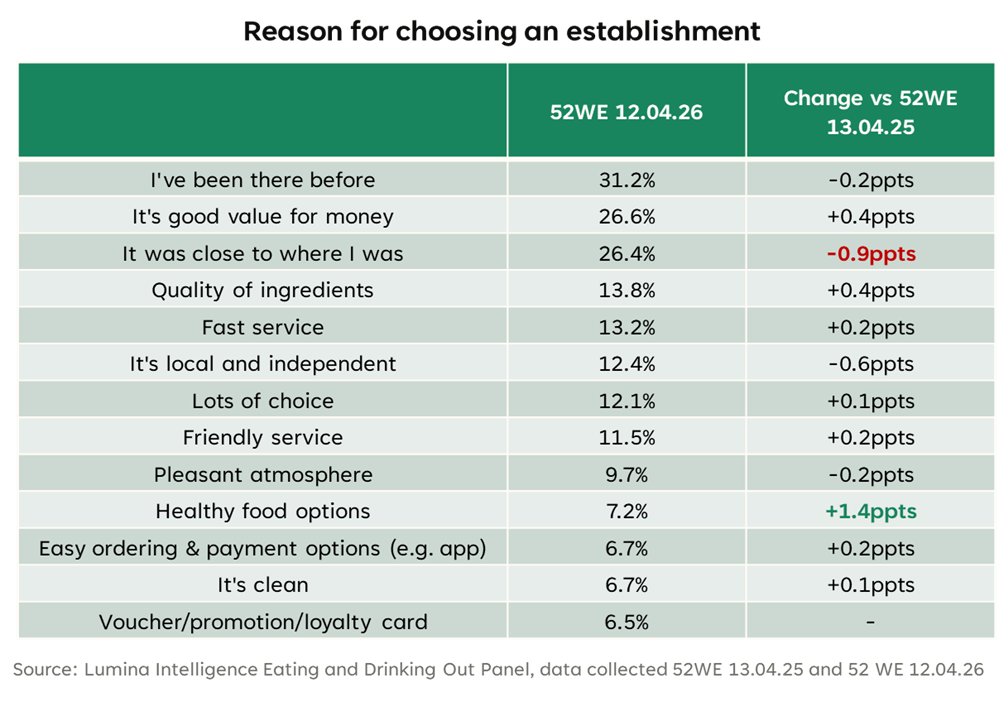
This reflects a broader shift in mindset. Instead of maximising quantity or frequency, many consumers are adopting a “less but better” approach to eating out, prioritising fewer but more considered meals.
The Rise of Health-Conscious Eating Behaviours
Despite overall participation in eating out declining slightly, the consumers who remain active in the market are more intentional and quality-driven.
Health-conscious behaviour is particularly evident in:
- Increased demand for nutrition-led menu options
- A growing focus on ingredient quality and freshness
- A shift toward restorative, intentional dining occasions rather than spontaneous visits
Lunch continues to dominate as the core meal occasion, driven in part by health and quality-led missions, while brunch is emerging as a fast-growing daypart.
Healthy Fast Casual Is Transforming QSR
Perhaps the most notable development is the transformation of the quick-service restaurant (QSR) sector. Traditionally associated with indulgence or convenience, QSR is now being reshaped by health-conscious consumers.
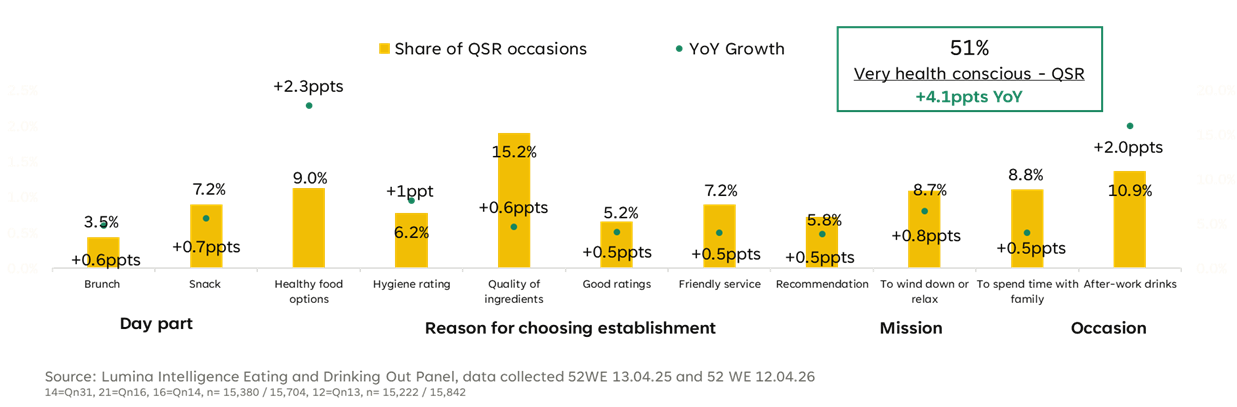
- Over half of QSR consumers now identify as “very health conscious”, making it the fastest-growing mindset segment in the category.
- Health-led fast casual brands are expanding rapidly, offering fresh, plant-forward and nutrient-focused meals.
Brands such as Farmer J, atis, and The Salad Project are driving this shift, focusing on fresh ingredients, customisable, balanced meals and a premium yet accessible positioning. These reflect a broader repositioning of fast food toward functional, everyday nutrition rather than occasional indulgence.
Functional Drinks and Wellness Choices Gain Traction
Nutrition trends are not limited to food, with drinks also evolving to meet changing consumer expectations. The report highlights strong growth in functional soft drinks, non-alcoholic alternatives linked to wellness, and premium, flavour-led beverages that align with increasingly health-conscious lifestyles.
At the same time, consumers are beginning to decouple how they spend on food and drink. This allows them to maintain tighter control over budgets while making more deliberate, health-oriented choices. As a result, beverage consumption is becoming more intentional and personalised, reinforcing a broader shift toward wellness-driven habits.
Value Is Being Redefined Through Nutrition
A fundamental shift is also taking place in how value is perceived within the eating-out market. Rather than focusing purely on price, consumers are increasingly associating value with higher ingredient quality, healthier menu options and an improved overall experience.
This change is particularly significant in the context of ongoing cost-of-living pressures, reduced discretionary spending, and greater scrutiny over when and where to eat out. In response, operators are adapting by delivering meals that balance quality and nutrition with affordability, offering consumers a stronger sense of return on their spend.
Policy and Regulation Are Reinforcing Health Trends
External forces are further accelerating the industry’s focus on nutrition. Regulatory developments are pushing operators toward greater transparency and healthier offerings, with measures such as restrictions on advertising high fat, salt and sugar (HFSS) products, potential expansions of calorie labelling, and increased scrutiny around nutritional standards.
These changes are encouraging businesses to reformulate menus, improve the clarity of nutritional information, and invest more heavily in healthier product development. In doing so, regulation is acting as both a constraint and a catalyst for innovation.
A More Selective, Health-Focused Consumer
The eating-out market is also becoming more polarised. Growth is increasingly concentrated among a smaller, more affluent group of consumers who visit more frequently, engage more deeply with food choices, and place greater emphasis on quality and nutrition.
At the same time, lower-income consumers are reducing participation, often opting for home consumption or delivery. This divergence has led to the emergence of two distinct behavioural segments: “emotional investors,” who prioritise high-quality, meaningful food experiences, and “strategic spenders,” who carefully plan their visits and focus on value.
Despite their differences, both groups share a common expectation for better, healthier food options, reinforcing the central role of nutrition across the market.
Conclusion: Nutrition as a Structural Shift
The UK eating-out market in 2026 is no longer defined purely by convenience or indulgence. Instead, it is increasingly shaped by health, nutrition, and quality-conscious consumption.
From the rise of healthy fast-casual formats to the growing importance of functional drinks and regulatory pressure, nutrition is becoming a structural pillar of the industry.
For operators and brands, the implication is clear: success will depend on the ability to balance health, quality, and value, delivering food that meets both the nutritional expectations and financial realities of today’s consumers.
About the data
The Lumina Intelligence Eating Out Market Report 2026 provides a comprehensive view of the UK foodservice market as it transitions from a prolonged period of inflationary pressure into a more stabilised, but highly competitive, trading environment.
Positioned as both a reflection on the current market landscape and a forward-looking guide to 2027 and beyond, the Eating Out Market Report 2026 equips operators, suppliers and investors with the insight needed to navigate an increasingly complex and fragmented foodservice market.
What are the main healthy eating-out trends in the UK?
Health is becoming a central factor in dining decisions, with consumers prioritising quality ingredients, balanced meals, and more nutritious options. This is driving demand for healthier menus, functional drinks, and more intentional eating habits.
Why are UK consumers choosing healthier options when eating out?
Consumers are increasingly focused on long-term wellbeing, while also becoming more selective with their spending. As a result, they are choosing meals that offer both nutritional value and perceived quality, rather than simply convenience.
How is the QSR sector adapting to health-conscious consumers?
Quick-service restaurants are evolving by introducing fresher, more balanced menu options and expanding into fast-casual formats. Many brands now focus on customisable, ingredient-led meals that align with health-conscious lifestyles.
What role do drinks play in healthy eating trends?
Drinks are becoming part of the wellness shift, with growth in functional beverages, non-alcoholic options, and premium soft drinks. Consumers are making more intentional choices, often separating drink decisions from food purchases.
Has the definition of value changed in the eating-out market?
Yes, value is no longer just about price. Consumers increasingly associate value with higher-quality ingredients, healthier options, and a better overall experience, especially in a cost-conscious environment.
How are regulations influencing healthier eating options?
Policies such as HFSS advertising restrictions and calorie labelling are encouraging businesses to offer healthier products, improve transparency, and reformulate menus to meet evolving standards.
Who is driving growth in the eating-out market?
Growth is increasingly driven by more affluent consumers who eat out more frequently and prioritise quality and nutrition. However, all consumer groups are showing a growing expectation for healthier food choices.
Are consumers eating out less or differently?
Consumers are generally becoming more selective, often adopting a “less but better” approach. This means fewer visits overall, but a stronger focus on quality, nutrition, and experience when they do choose to eat out.