

Drinking habits in the UK are, once again, shifting, this time towards a more selective approach. The UK alcohol drinker is not quite cutting back, but carefully choosing their tipples, and when to enjoy them.
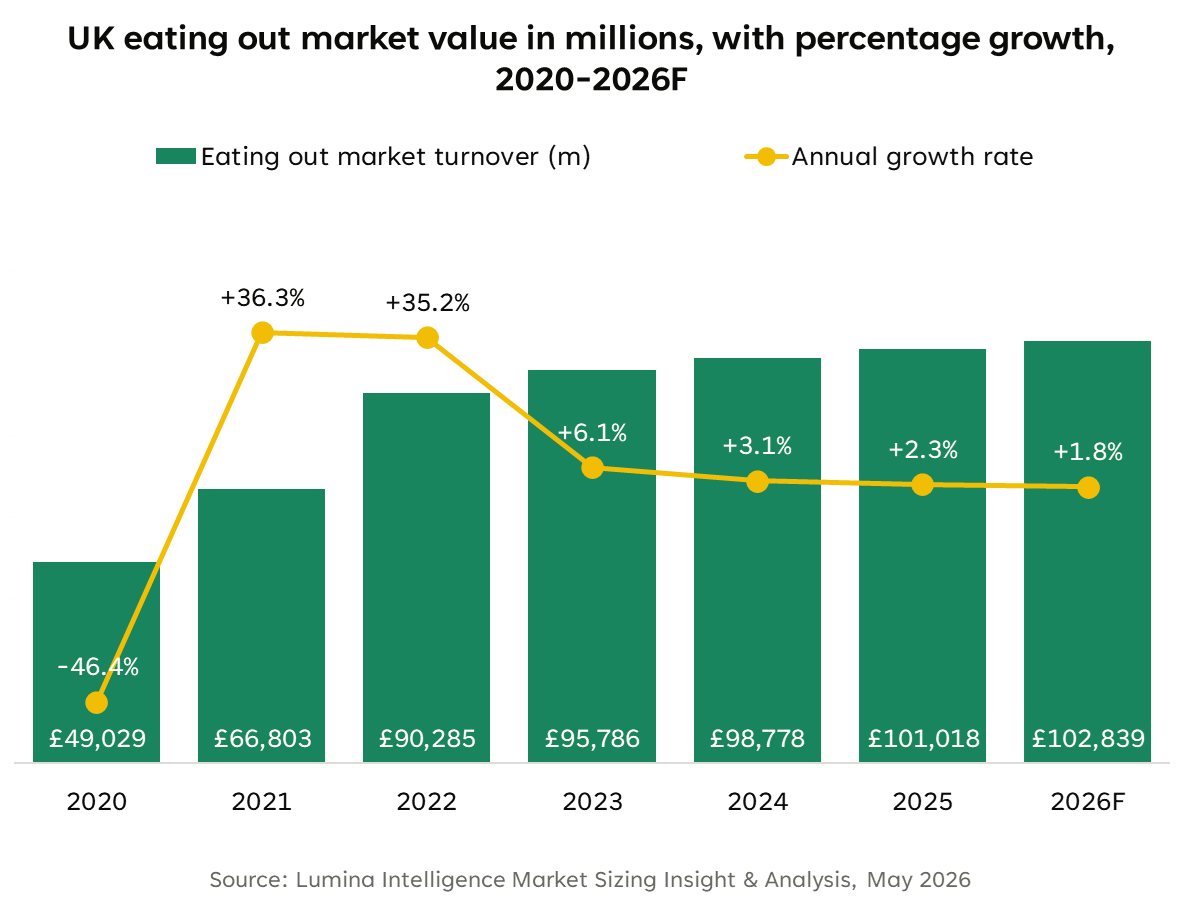
That shift is happening within a £102.8bn UK eating out market, reflecting wider pressure from cost of living, health awareness and changing social habits.
The result is a market that looks stable on the surface but is changing underneath. Beer is still the biggest part of the category, wine still has a role. But the direction of travel within UK alcohol trends 2026 is being set elsewhere.
Category Performance: Beer vs Wine vs Spirits vs Cider
Beer remains the largest part of the on-trade drinks mix, accounting for the majority of alcoholic occasions. However, beer is slightly declining in share. Wine is also losing both share and frequency.
Growth is concentrated in smaller, more flexible categories such as:
- Spirits, gaining share and frequency
- Cider, increasing its share
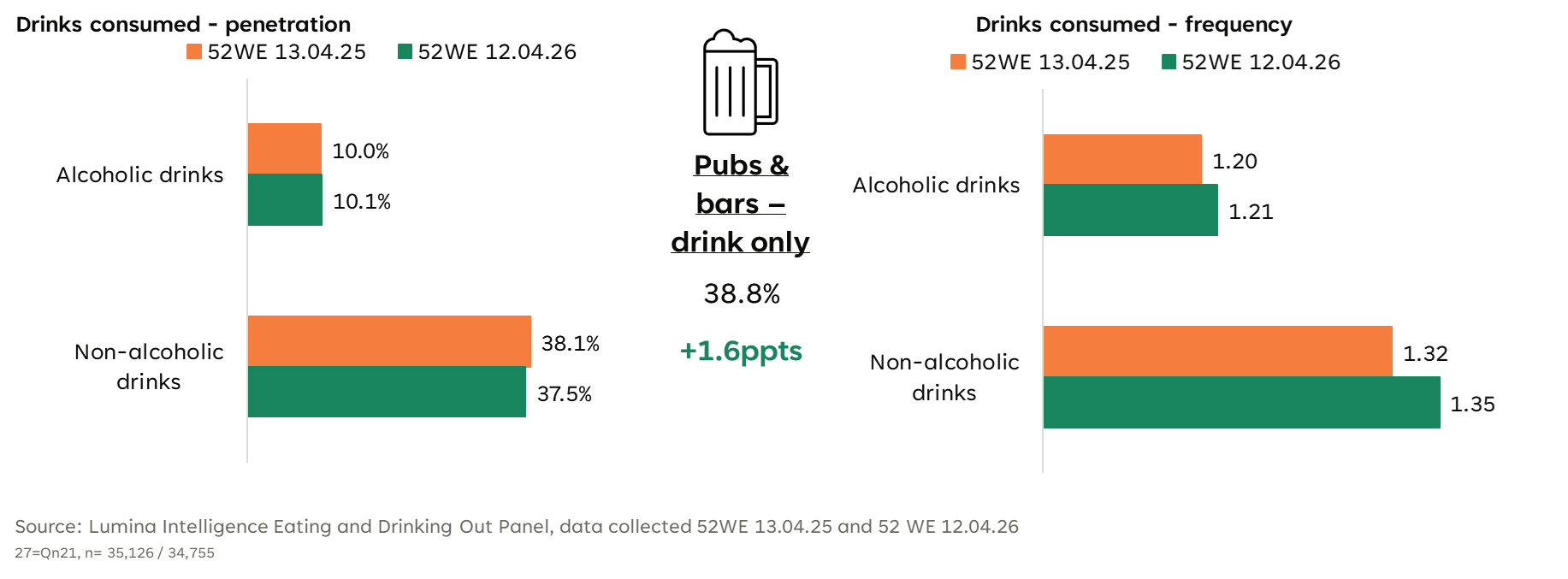
- Non-alcoholic drinks, rising alongside alcohol
The shift towards fewer, more intentional drinking occasions is reducing the number of habitual and group-led visits where beer and wine traditionally dominate. In contrast, spirits, cider and non-alcoholic drinks are gaining share since they fit a wider range of modern occasions, from solo visits to moderation-led consumption, even where the format of the drink itself has not changed.
Why Spirits Are Growing in the UK
Spirits are the clearest beneficiary of current UK alcohol market trends 2026.
Their increased share and frequency is supported by higher spend per occasion and stronger alignment with how people now drink. Moreover, they fit the “less but better” mindset of the modern drinker.
Essentially, when consumers go out less often, they tend to trade up within the occasion.
Spirits are also more adaptable because they work as a complete, intentional choice across a wider range of occasions, from short after-work visits to premium serves. Beer still works in these moments, particularly as a familiar, low-effort choice or in premium and craft formats, but it remains more closely linked to repetition and social drinking. Wine performs strongly in higher-end or food-led settings but is more dependent on planned occasions or longer visits, which limits its flexibility as occasions become shorter and more individual.
| Alcohol Occasions | Beer | Wine | Cider | Spirit | Cocktail |
|---|---|---|---|---|---|
| Share of alcohol occasions | 55.0% | 24.5% | 12.8% | 10.9% | 9.6% |
| Share change | -0.2ppts | -0.9ppts | +0.6ppts | +0.7ppts | +0.2ppts |
| Frequency change | – | – | +1.8% | +1.9% | -0.9% |
| Spend on Drinks | £13.41 | £17.73 | £14.58 | £20.18 | £20.65 |
| Number of drinks bought | 2.5 | 1.9 | 2.3 | 2.5 | 2.4 |
Changing Drinking Behaviour in the UK
One of the most important shifts is how occasions are changing in structure and intent. Our latest Eating and Drinking Out data shows a move toward more drink-led, casual occasions, with pubs and quick-service environments gaining share.
At the same time, overall visit frequency is declining as consumers remain cost-conscious. When consumers do go out, behaviour is more deliberate: they are staying longer, trading up, and prioritising quality over quantity. This reflects a broader move away from high-frequency, high-volume drinking toward more selective and intentional consumption, where each occasion carries greater weight
The Growth of No/Low Alcohol and Zebra Striping
No and low alcohol is now part of mainstream occasions, often through “zebra striping”, where consumers alternate between alcoholic and non-alcoholic drinks within the same visit.
This changes how alcohol is consumed: by reducing the total alcohol intake per visit, occasions can last longer. Non-alcoholic drinks can sit alongside alcohol, no longer being an either/or option.
For alcohol categories, this increases competition within the same occasion as each drink needs to justify its place.
This is one of the more important UK-wide no alcohol trends, particularly among younger and more health-conscious consumers.
Impact on UK Pubs and Bars
The pub and bar market remains significant, worth around £24.6bn, but outlet numbers are declining.
Growth is being driven by:
- Drinks-led occasions rather than food
- Experiential venues
- Premium offerings
Operators are also adapting to the changing drinking habits UK consumers are showing such as:
- Shorter visits
- More solo occasions
- Higher expectations per visit
These shifts are reshaping the fundamentals of the pub and bar occasion. Visits are becoming less routine and more purposeful, with consumers placing greater emphasis on quality, atmosphere and overall experience. As a result, success is increasingly less about driving volume and more about delivering occasions that feel considered, distinctive and worth the spend.
Value vs Premium: The Key Market Divide
The market is becoming increasingly polarised as consumers reduce frequency but become more intentional with spend. This is driving a split between:
- “Strategic spenders” prioritising affordability
- “Emotional investors” seeking higher-quality, more memorable experiences
As a result, the middle of the market is under pressure. Products that do not clearly deliver either strong value or a compelling experience are being squeezed.
This is particularly visible across drinks:
- Beer continues to perform at the value end
- Premium spirits are growing as consumers trade up for fewer, better occasions
- Mid-tier wine is under pressure, lacking both the price advantage of entry-level options and the experiential pull of premium alternatives
Future Outlook for the UK Alcohol Market
The direction of travel is gradual but increasingly clear. The UK alcohol market is undergoing a steady rebalancing driven by changing consumer behaviour.
As frequency continues to decline, occasions are becoming more deliberate and higher value. This will continue to favour categories and formats that align with flexibility, moderation and experience-led consumption.
More broadly, success in the UK alcohol market will depend less on driving volume and more on aligning with how occasions are evolving. Categories that can justify their place within fewer, more considered visits will continue to gain share, while those reliant on frequency and habit will find it harder to keep pace.
About the data
The Lumina Intelligence Eating Out Market Report 2026 provides a comprehensive view of the UK foodservice market as it transitions from a prolonged period of inflationary pressure into a more stabilised, but highly competitive, trading environment.
Positioned as both a reflection on the current market landscape and a forward-looking guide to 2027 and beyond, the Eating Out Market Report 2026 equips operators, suppliers and investors with the insight needed to navigate an increasingly complex and fragmented foodservice market.
FAQs
Is alcohol consumption declining in the UK?
Not necessarily. Rather than a clear decline, the market is shifting towards more selective and intentional consumption. Consumers are drinking less frequently, but placing more emphasis on quality, experience and occasion when they do.
Why are spirits growing faster than beer and wine?
Spirits are better aligned with modern drinking behaviour. As consumers go out less often, they are more likely to trade up within each occasion, and spirits offer greater flexibility across different settings—from casual drinks to premium experiences.
Why is wine, particularly mid-tier, under pressure?
Mid-tier wine sits in a challenging position. It is often:
- Not affordable enough for value-led consumers
- Not premium enough to feel like a treat
As the market polarises, consumers are increasingly trading down to value or up to premium, leaving the middle squeezed.
What is driving the shift towards fewer drinking occasions?
Intentional drinking refers to a mindset where consumers are more deliberate about when, where and what they drink. Each occasion carries more importance, leading to higher-quality choices and a stronger focus on experience.
What is “zebra striping” and why does it matter?
“Zebra striping” is when consumers alternate between alcoholic and non-alcoholic drinks within the same occasion. It matters because it:
- Reduces total alcohol consumption per visit
- Extends dwell time
- Increases competition between drinks within the same occasion
Is no/low alcohol replacing traditional alcohol?
No, rather than replacing alcohol, no/low options are expanding occasions. They increasingly sit alongside alcoholic drinks, giving consumers more flexibility and choice.
How are pubs and bars adapting to these changes?
Operators are shifting their focus towards:
- Experience-led environments
- Premium offerings
- Occasion-driven formats
Success is becoming less about volume and more about creating occasions that feel worth the spend.
What does market polarisation mean in this context?
Polarisation refers to the growing divide between:
- Value-driven consumption (affordability-focused)
- Premium, experience-led consumption
Products that do not clearly deliver either are increasingly under pressure.
What does this mean for brands and operators?
Brands need to align with fewer, more considered occasions by:
- Clearly delivering either value or premium experience
- Justifying their place within each occasion
- Adapting to more flexible and moderation-led consumption patterns
What is the overall outlook for the market?
The market is expected to rebalance rather than decline, with growth coming from categories and formats that meet evolving consumer expectations. Success will depend on the ability to remain relevant in fewer, higher-value occasions.