

The UK drinking landscape is becoming increasingly selective. Consumers are still participating in drinking occasions, but they are applying a much clearer test of value. The drink, the setting and the experience increasingly need to justify both the spend and the occasion. Rather than thinking in terms of traditional categories such as beer, wine or spirits, consumers are making choices based on the role a drink plays within a specific moment.
This shift means the industry needs to look beyond whether consumers are drinking more or less and focus instead on what they drink, why they choose it, where and when consumption happens, and how moderation and premiumisation are reshaping occasions.
Consumers Are Becoming More Selective Rather Than Disengaging
Financial pressures remain a defining influence on drinking behaviour. Average household discretionary income appears relatively resilient, but the picture varies significantly across income groups. Consumer confidence also remains negative, creating a more deliberate approach to discretionary spending. Consumers have become more selective about which occasions survive, where they occur and what constitutes acceptable value.
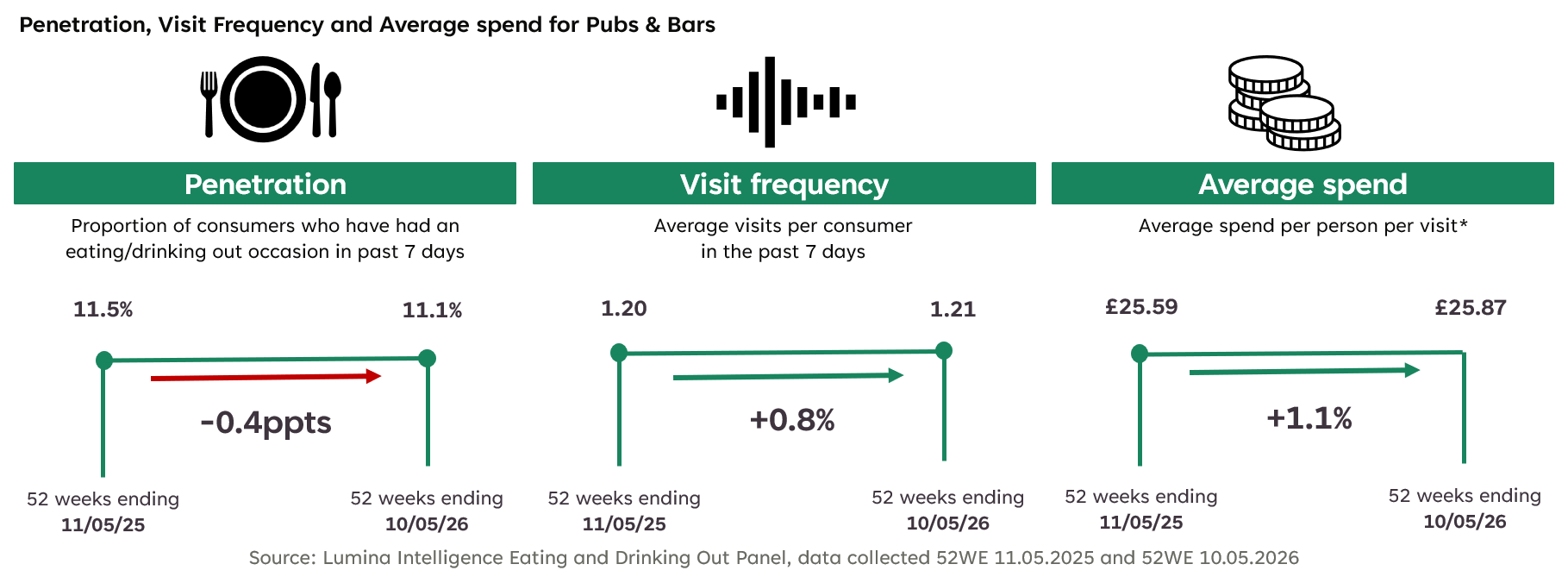
This selectivity is visible across both on-trade and retail channels. In pubs and bars, frequency remains broadly stable while average spend is maintained. In convenience, consumers are visiting more frequently but purchasing fewer items. Rather than withdrawing from drinking altogether, consumers are actively managing occasions and editing baskets.
The result is a market where growth increasingly depends on winning the occasions consumers still choose to value rather than simply driving consumption volume.
Drinking Occasions Are Becoming More Purposeful
Lumina notes that pub visits are becoming more intentional, quality-led and occasion-driven. Socialising remains the dominant mission, while treat occasions recorded the strongest growth.
Consumers are increasingly choosing pubs for intentional social and leisure occasions rather than convenience-led visits. Socialising increased to 44.1% of pub missions, while treat occasions recorded the strongest growth. Convenience-led visits for food or drink declined.
This evolution changes how drinks are selected. The consumer is no longer simply a beer drinker or a wine drinker. Instead, they are choosing products that fit a social occasion, a treat occasion, a relaxing solo visit or a food-led experience.
The Occasion Now Dictates the Drink
Perhaps the clearest evidence of occasion-based drinking comes from changing category performance.
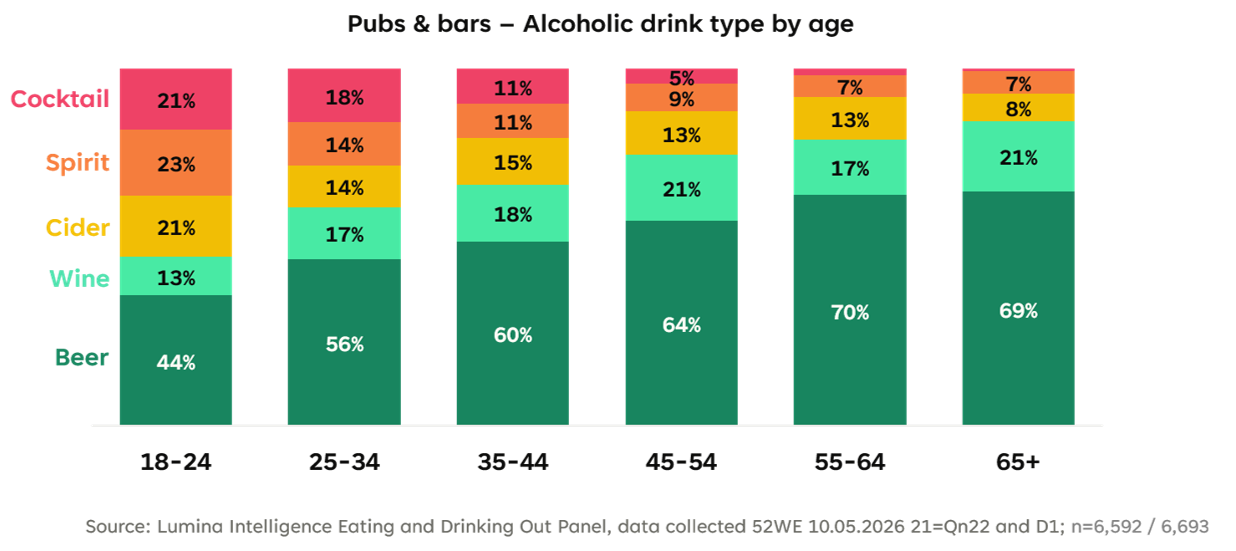
Beer remains the dominant alcoholic drink, accounting for more than half of alcoholic-drink occasions. However, its share continues to soften while cider, spirits and cocktails gain share. Wine also loses share. Growth is increasingly coming from a broader repertoire of drinks that fit different needs, flavours, formats and levels of involvement.
The presentation makes the implication clear: category planning should not start with one universal drinker. It should begin with the occasion and then identify the most relevant repertoire for that moment and audience.
Younger consumers demonstrate this trend particularly strongly. Beer remains part of their repertoire, but it is less dominant among 18 to 24-year-olds. Younger adults over-index for cocktails, spirits and cider, suggesting they are not rejecting alcohol altogether but are seeking greater flavour, variety, flexibility and stronger occasion fit.
Rather than loyalty to a category, younger consumers appear loyal to experiences and occasions.
Why Consumers Choose Drinks Is Changing
The strongest reason for buying an alcoholic drink remains habit, with 56% of consumers saying they regularly drink the chosen product. However, treating and food pairing are increasingly important reasons for choice. Treating accounts for 21.7% of occasions, while compatibility with food accounts for 13.9%.
Treating has strengthened among 25 to 44-year-olds and higher-income consumers, while food compatibility has become more important among younger cohorts. This suggests consumers are looking for a reason to trade up beyond habit.
Premiumisation continues to exist, but the route to premiumisation has changed. Consumers appear willing to spend more when premium products help make an occasion feel distinctive. Cocktails and spirits are growing share and are associated with the highest average occasion spend.
In today’s environment, premium needs to create a visible difference to the occasion rather than simply command a higher price.
About the data
The Lumina Intelligence UK Pub & Bar Market Report 2026 provides a comprehensive review of one of the UK’s most important hospitality sectors as it navigates continued economic pressure, changing consumer habits and evolving pub operating models.
Positioned as both a reflection of current market conditions and a forward-looking guide to 2029, the report equips stakeholders with the insight needed to identify growth opportunities and build resilience in a challenging trading environment.
FAQ
What is occasion-based drinking?
Occasion-based drinking is when consumers choose drinks based on the specific situation, experience, or social moment rather than sticking to a preferred alcohol category such as beer, wine, or spirits. The occasion often determines the drink selection, whether it’s a social gathering, meal, celebration, or treat occasion.
Why is occasion-based drinking replacing category loyalty?
Consumers are becoming more selective with discretionary spending and want drinks that add value to a particular experience. Instead of identifying as a beer, wine, or spirits drinker, many consumers now select products that best fit the occasion, mood, or social setting.
How are financial pressures affecting alcohol consumption?
Rising living costs and cautious consumer confidence are encouraging consumers to prioritise certain drinking occasions while reducing spending elsewhere. Rather than giving up alcohol entirely, many people are becoming more deliberate about where, when, and what they drink.
Are consumers drinking less alcohol overall?
The trend is not simply about drinking less. Many consumers continue to participate in drinking occasions but are making more considered choices. They are often editing their baskets, reducing impulse purchases, and choosing drinks that provide stronger perceived value.
Why are drinking occasions becoming more purposeful?
Consumers increasingly view drinking as part of a broader experience. Socialising, treating themselves, and pairing drinks with food are becoming more important motivations, leading to more intentional drink choices and occasion planning.
How is consumer behaviour changing in pubs and bars?
Pub visits are becoming more occasion-driven, with consumers increasingly visiting for social experiences, celebrations, and treat occasions. Convenience-led visits are declining as consumers seek experiences that feel worthwhile and memorable.
Which alcoholic drink categories are gaining share?
While beer remains the largest alcohol category, cider, spirits, and cocktails are gaining share as consumers seek greater variety, flavour exploration, and drinks that better suit different occasions.
Why are younger consumers less loyal to traditional alcohol categories?
Younger adults tend to have broader drinking repertoires and are more likely to switch between beer, cocktails, spirits, and cider depending on the occasion. Their decisions are often driven by experience, flavour preferences, and social context rather than category loyalty.
What does occasion-based drinking mean for alcohol brands?
Alcohol brands increasingly need to build strategies around specific occasions and consumer needs. Understanding why, where, and when people drink can be more valuable than targeting consumers based on category preferences alone.