

The bakery market is operating in a challenging consumer environment, but several traditional bakery channels continue to outperform. As consumers become more intentional about what they eat, demand is shifting towards products that balance convenience, quality and health credentials. For bakery operators, this presents an opportunity to evolve offerings without sacrificing indulgence. Insights from Lumina Intelligence reveal how changing consumer priorities are shaping the future of the sector.
Bakery’s Traditional Strongholds Continue to Grow
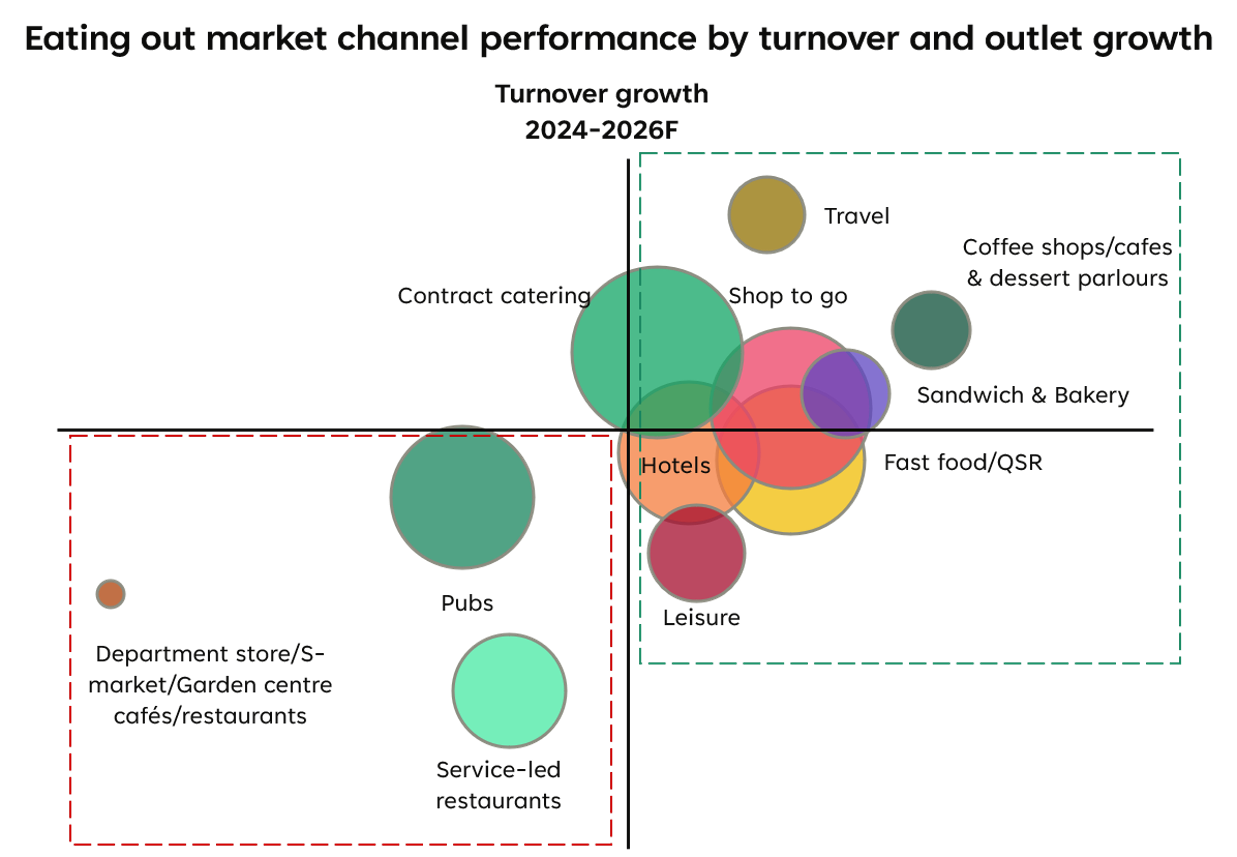
Despite wider market pressures affecting all touchpoints in the eating out ecosystem, bakery-friendly channels remain in growth, with coffee shops, sandwich shops, bakeries and travel locations all seeing positive momentum.
These channels are benefiting from a steady consumer demand for convenient food occasions at all day-parts, however breakfast deserves an honourable mention, as it positions itself as a particularly important occasion.
Rising Breakfast Demand Creates New Opportunities
Breakfast continuous to be one of the most attractive growth occasions, and consumers are actively looking for more breakfast options in convenience-led environments.
This opportunity extends beyond traditional bakery outlets, reaching out to include also travel hubs, forecourts and grab-and-go locations. In fact, regarding forecourts, 36.3% of consumers say breakfast deals would tempt them to purchase more during their forecourt shop incursions.
Health and Quality Are Redefining Bakery Choice
Alongside growing concerns about ultra-processed foods, with 52% of consumers reporting a less favourable view of UPFs than a year ago, people are becoming increasingly mindful of what they eat. This shift is also driving interest in functional ingredients, 76% of consumers expressed curiosity about foods and drinks that offer additional health benefits.
Consumers continue their pursuit of all-natural, minimal ingredient foods, and ingredient quality is also becoming a more important venue selection driver. As demand for healthy, quality food options accelerates, operators should communicate ingredient provenance and product quality more clearly.
A credible “lighter” bakery tier featuring higher-protein options, seeded products, sourdough and other fermented products, and lighter meal pairings like soup and salad aligns directly with the consumer’s growing interest in healthier choices while maintaining the appeal of convenience bakery.
| Reason for choosing an establishment | 52WE 12.04.26 |
Change vs 52WE 13.04.25 |
|---|---|---|
| I’ve been there before | 31.2% | -0.2ppts |
| It’s good value for money | 26.6% | +0.4ppts |
| It was close to where I was | 26.4% | -0.9ppts |
| Quality of ingredients | 13.8% | +0.4ppts |
| Healthy food options | 7.2% | +1.4ppts |
Conclusion
Bakery remains well positioned for growth, particularly in channels benefiting from breakfast demand and convenience-led consumption. However, future success will depend on adapting to more health-conscious consumer behaviours. Operators that combine convenience with quality ingredients, healthier formats and strong provenance messaging will be best placed to capture emerging demand.
Why are health-conscious consumers spending more in bakery channels?
Health-conscious consumers are not necessarily cutting back on bakery products. Instead, they are becoming more selective, favouring products made with higher-quality ingredients, clearer provenance and perceived nutritional benefits. This creates opportunities for operators to offer products that balance indulgence with wellness credentials.
How are concerns about ultra-processed foods affecting bakery purchases?
Consumer attitudes towards ultra-processed foods are shifting, with 52% reporting a less favourable view of UPFs than a year ago. As a result, bakery products that highlight traditional preparation methods, simpler ingredient lists and artisanal credentials may resonate more strongly with consumers.
What are functional ingredients in bakery products?
Functional ingredients are those that offer benefits beyond basic nutrition. Examples include added protein, fibre, seeds, wholegrains, gut-friendly ingredients and products containing vitamins or minerals. Research shows that 76% of consumers are interested in functional ingredients, reflecting growing demand for foods that support health and wellbeing.
Which bakery products are benefiting from health and wellness trends?
Products such as sourdough bread, seeded loaves, high-protein bakery items and fermented products are well positioned to capitalise on growing interest in healthier eating. Consumers are increasingly looking for options that combine convenience, taste and perceived nutritional value.
How can bakery operators respond to changing consumer preferences?
Operators can respond by broadening their range of healthier bakery options, improving ingredient transparency and clearly communicating product quality. Pairing bakery products with lighter menu options such as soups, salads and protein-rich fillings can also help meet evolving consumer expectations.
Is breakfast still an important growth opportunity for bakeries?
Yes. Breakfast remains one of the most significant growth occasions across the food-to-go market. Consumers continue to seek convenient breakfast solutions, creating opportunities for bakery operators to drive sales through breakfast-focused products, meal deals and grab-and-go formats.
What do consumers look for when choosing a bakery or food-to-go outlet?
Alongside convenience and value, consumers are placing greater emphasis on food quality, healthier options and ingredient credentials. Operators that can clearly communicate these attributes are likely to be better positioned to attract increasingly health-conscious consumers.