

For many consumers, eating out is becoming less about the occasion itself and more about fulfilling an immediate need.
The latest Eating and Drinking Out Panel (EDOP) data from Lumina Intelligence shows that convenience now accounts for 62.8% of all eating and drinking out missions, significantly outweighing leisure and treat occasions, which account for 37.2%.
The findings suggest that a growing proportion of eating out occasions are being driven by practical rather than experiential motivations.
Convenience Is the Dominant Driver of Visits
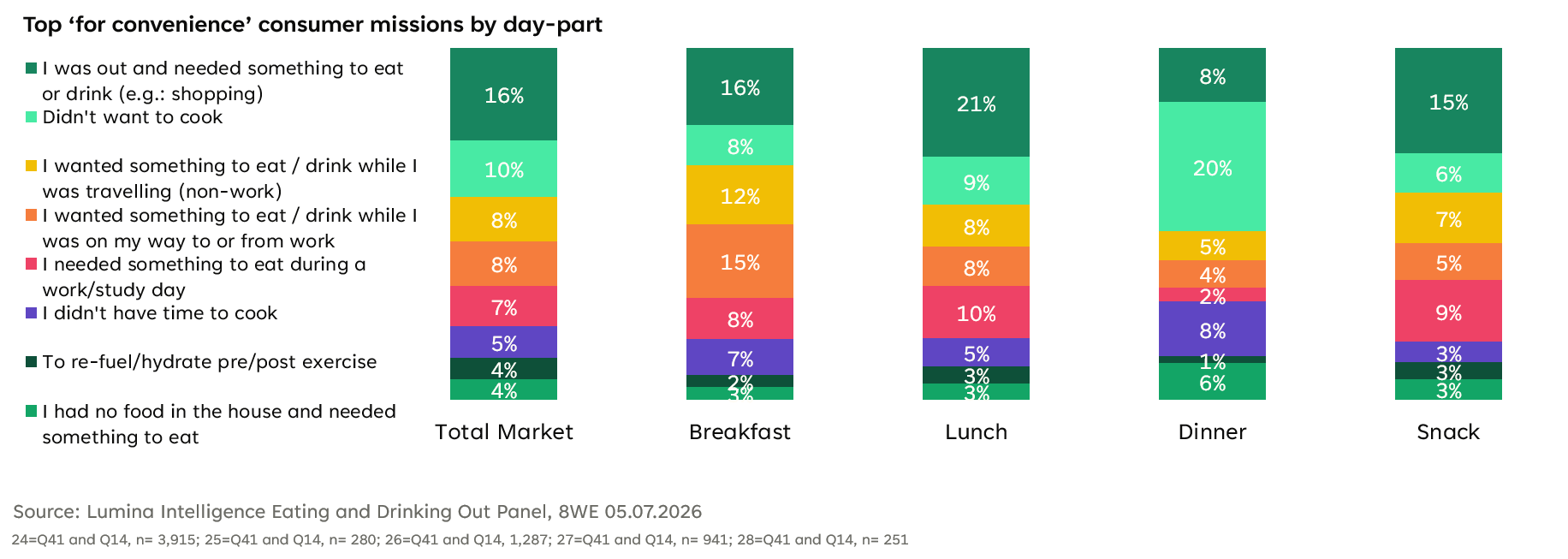
The most common reason consumers eat and drink out is because they are already out and need something to eat or drink.
Other leading motivations include:
- Not wanting to cook
- Wanting something to eat or drink while travelling
- Needing food during a work or study day
- Purchasing food or drink on the way to or from work
- Not having time to cook
Together, these missions point to a market increasingly shaped by functionality, where consumers are seeking solutions that fit around existing routines and commitments.
Daytime Occasions Are Growing
Changes in day-part performance further reinforce this shift. In Q2 2026, lunch increased its share of occasions by 1.4 percentage points year-on-year, while breakfast grew by 1.0 percentage point and brunch increased by 0.8 percentage points. At the same time, dinner lost 2.0 percentage points of share.
According to the data, consumers are increasingly opting for lunch and breakfast occasions, while more informal dining occasions are supporting growth at brunch.
These results suggest demand is becoming more concentrated around occasions that can be easily integrated into daily routines.
Speed and Accessibility Matter
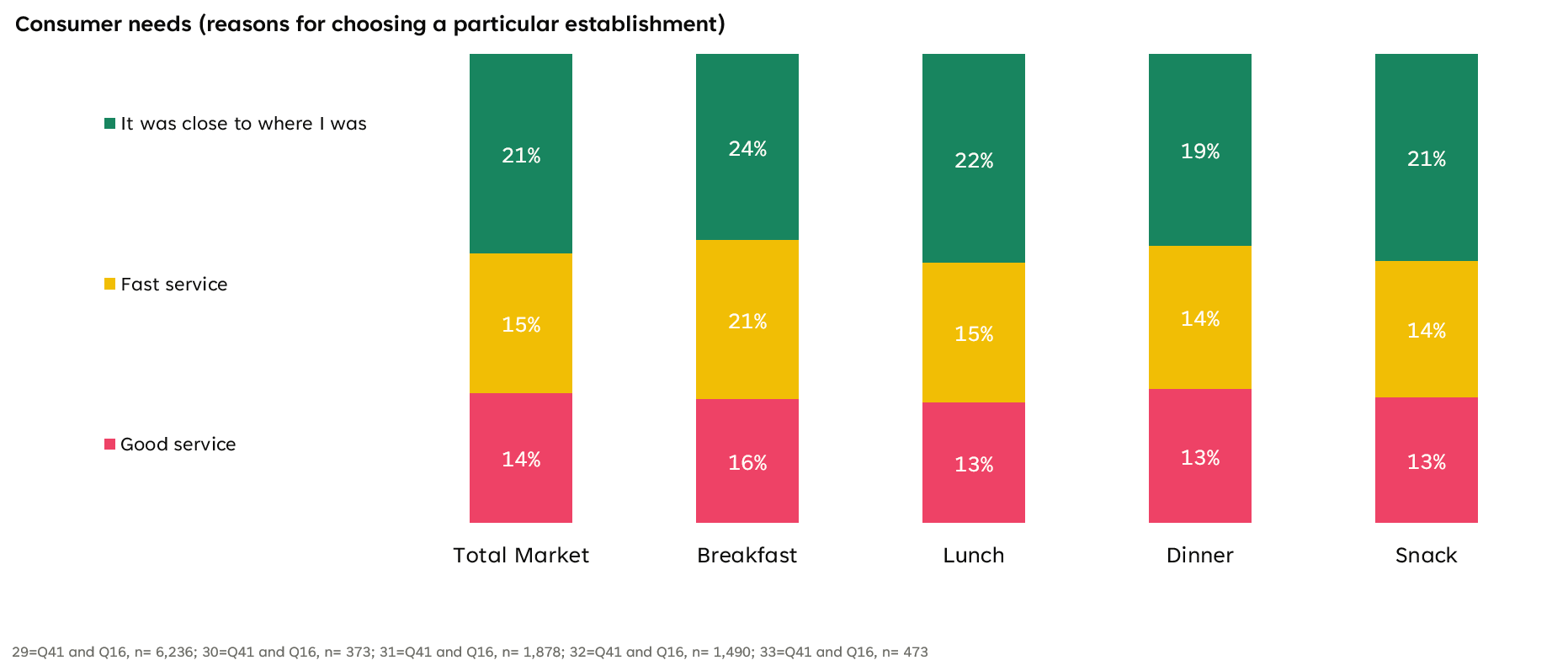
Consumer needs data shows that practical considerations play a major role in establishment choice.
The leading reasons for choosing a venue are:
- It was close to where I was
- Fast service
- Good food and drink quality
- Good choice of food and drink
- Good service
Proximity and speed of service are particularly important during breakfast occasions, showcasing that convenience is not limited to price. Consumers are placing value on establishments that make eating and drinking out easy, accessible and efficient.
Functional Dining Is Supporting Channel Growth
The channels gaining occasion share align closely with these convenience-driven behaviours.
QSR increased its share of occasions by 2.7 percentage points year-on-year, while catering increased by 2.9 percentage points. Both channels have benefited as consumers seek quality credentials delivered at a good price. Catering also saw growth in brunch occasions, while lunch occasions were supported by tighter office-working patterns and demand for quick meal solutions.
Conclusion: Value and Function Are Increasingly Linked
Consumers remain strongly value-led, but not necessarily in search of the lowest price. Instead, value is increasingly associated with quality, taste, presentation, health credentials and brand trust.
As economic pressures continue to affect spending, consumers still want to go out, but they are becoming more selective about how and when they do so. Eating out occasions that solve a practical need while delivering quality and value appear to be resonating most strongly.
With convenience accounting for almost two-thirds of all eating and drinking out missions, consumers are prioritising occasions that fit into their daily lives, whether that means grabbing breakfast on the go, purchasing lunch during a working day or choosing a venue that offers speed and accessibility.
As a result, functional dining is playing an increasingly important role in shaping where consumers spend their eating out occasions.
About the data
These insights have been powered by Lumina Intelligence’s Eating Out Panel (EDOP).
Always‑on consumer, occasion and channel insight for the UK out‑of‑home channels – all in one platform. Helping commercial, category and insight teams understand how people eat and drink across every format and occasion.
FAQs
What is the biggest driver of eating out occasions in the UK?
Convenience is the largest driver of eating and drinking out occasions. The report found that convenience accounts for 62.8% of all occasions, compared with 37.2% attributed to leisure and treat missions.
Why are breakfast and lunch occasions growing?
The report shows that consumers are increasingly prioritising occasions that fit around busy schedules. Breakfast gained 1.0 percentage point share of occasions, brunch gained 0.8 percentage points, and lunch gained 1.4 percentage points year-on-year, while dinner lost share.
What are the main reasons consumers choose to eat out for convenience?
The most common convenience missions include being out and needing something to eat or drink, not wanting to cook, travelling, commuting, needing food during a work or study day, and not having enough time to cook.
What factors influence consumers when choosing a venue?
The top reasons for choosing an establishment are proximity, fast service, good food and drink quality, a good choice of food and drink, and good service. Proximity and speed of service are particularly important at breakfast.
Which hospitality channels are gaining share?
QSR and catering both increased their share of occasions in Q2 2026. QSR gained 2.7 percentage points and catering gained 2.9 percentage points year-on-year, as consumers looked for quality credentials delivered at a good price.
How are consumers balancing convenience and value?
The report suggests consumers continue to eat and drink out despite economic pressures, but are becoming more selective about spending. Operators offering affordable, convenient and quality-led options are benefiting from this shift in behaviour.