

At a time when consumers remain under financial pressure and confidence remains fragile, many would expect premium hospitality businesses to struggle.
However, the latest Lumina Intelligence Operator Data Index reveals a fascinating growing divide within UK foodservice: while some operators face estate rationalisation and slower growth, premium and experience-led brands are consistently outperforming the market.
The result is what can be described as the premiumisation paradox: consumers are spending more cautiously overall, but continue to spend on experiences and products they perceive as genuinely worth paying for.
Premium Dining Is Leading Restaurant Growth
The restaurant sector illustrates this trend clearly.
The UK service-led restaurant market is forecast to grow turnover by +1.0% in 2026, with outlet numbers declining -0.9%. Yet within the market, fine dining is forecast to grow turnover by +4.1%, making it the strongest-performing restaurant segment.
Premium operators are also appearing prominently among the fastest-growing brands. Dishoom is forecast to increase turnover by +11.8%, while Hickory’s Smokehouse is expected to grow by +24.2%.
These results suggest consumers are becoming more selective, favouring occasions that feel higher quality, more memorable or more distinctive.
Experience-Led Hospitality Continues to Win
The same pattern can be seen across pubs and bars.
While the overall pubs and bars market is forecast to grow by +2.0%, some of the strongest performances are coming from operators that combine food, drink and social experiences.
The Lounges is forecast to deliver turnover growth of +15.4%, while concepts such as Little Door & Co, Flight Club and Vagabond continue to expand.
Consumers may be visiting pubs less frequently than in previous years, but when they do spend, they increasingly seek occasions that offer something beyond a standard food or drink transaction. Clearly, experience has become a powerful value driver.
Premium Coffee Continues Its Growth Story
Perhaps nowhere is premiumisation more visible than in coffee and food-to-go.
Despite economic uncertainty, premium operators continue to outperform across both turnover and outlet growth.
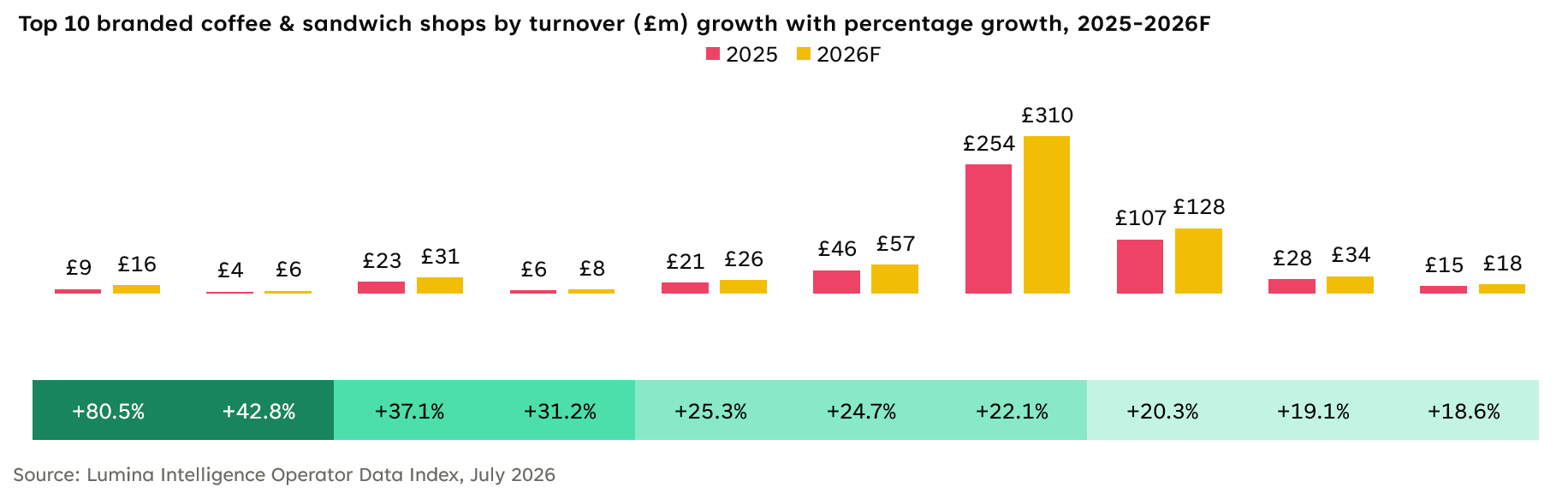
Gail’s Artisan Bakery is forecast to deliver +22.1% turnover growth in 2026, while Joe & The Juice is expected to grow by +20.3%. Emerging operators such as Urban Baristas and Blank Street are also expanding rapidly.
Consumers are increasingly associating value with quality ingredients, specialist products and distinctive brand experiences. In many cases, they are choosing fewer occasions but spending more on each visit.
Why Premiumisation Is Surviving Economic Pressure
Several factors are helping explain the trend. First, hospitality is increasingly occasion-led. Consumers want experiences that justify leaving home and spending money.
Second, premium no longer simply means expensive. Brands such as Dishoom, Gail’s and The Lounges combine quality with strong perceived value, making customers feel their spending is worthwhile.
Third, social media continues to amplify brands with distinctive products, aesthetics and experiences, helping premium operators attract new audiences and strengthen loyalty.
The Future of Foodservice Growth
The latest Operator Data Index suggests that premiumisation remains one of the most important forces shaping UK foodservice.
As consumer budgets remain constrained, operators cannot rely on inflation or market growth alone to drive performance. Instead, success increasingly depends on delivering products, experiences and occasions that customers believe are worth paying for.
The strongest-performing brands are proving that even in challenging trading conditions, consumers remain willing to trade up when the proposition is compelling enough.
About the data
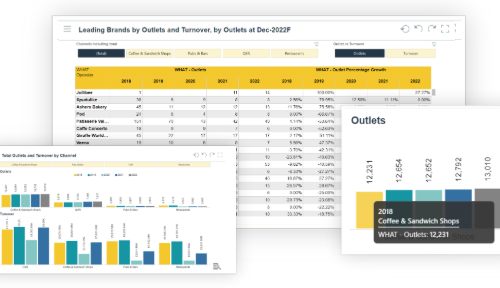
These insights have been powered by Lumina Intelligence’s Operator Data Index.
Continuous turnover and outlet data on 400+ UK pub, restaurant, QSR, sandwich and coffee shop operators. Analyse the leading and fastest growing brands through an interactive dashboard, supplemented with quarterly market intelligence reports.
What is hospitality premiumisation?
Hospitality premiumisation refers to consumers choosing higher-quality food, drink and hospitality experiences, even when budgets are under pressure. This often means spending less frequently but opting for brands, venues and occasions that deliver greater perceived value.
Are premium restaurants outperforming the wider market in 2026?
Yes. While the overall UK service-led restaurant market is forecast to grow turnover by just +1.0% in 2026, fine dining is forecast to grow by +4.1%, making it the strongest-performing restaurant segment.
Which restaurant brands are benefiting most from premiumisation?
Among branded restaurant operators, Dishoom is forecast to grow turnover by +11.8% and Hickory’s Smokehouse by +24.2% in 2026, highlighting continued demand for differentiated and experience-led dining concepts.
Why are consumers still willing to pay more despite economic pressures?
Consumers are becoming increasingly selective with discretionary spending. Rather than increasing the number of occasions, many are prioritising experiences that feel memorable, higher quality or offer stronger value for money.
How are pubs and bars benefiting from premiumisation?
Experience-led pub and bar operators are among the strongest performers in the market. The Lounges is forecast to deliver turnover growth of +15.4% in 2026, while concepts such as Little Door & Co, Flight Club and Vagabond continue to expand.
What role does experience play in hospitality growth?
Experience has become a key driver of value. Consumers increasingly seek social, immersive and occasion-led experiences that go beyond a standard food or drink purchase, helping premium operators outperform the wider market.
Is premium coffee still growing in the UK?
Yes. Premium coffee and food-to-go brands continue to perform strongly. Gail’s Artisan Bakery is forecast to achieve +22.1% turnover growth in 2026, while Joe & The Juice is forecast to grow by +20.3%.
Which premium coffee brands are expanding fastest?
Operators such as Gail’s Artisan Bakery, Joe & The Juice, Urban Baristas and Blank Street are among the fastest-growing premium coffee and food-to-go brands in the UK market.
Does premiumisation mean consumers are spending more overall?
Not necessarily. Many consumers are reducing visit frequency but increasing spend per occasion, choosing venues and products they believe offer higher quality, stronger experiences or better value.
What does premiumisation mean for hospitality operators?
The trend suggests operators can no longer rely solely on market growth or inflation to drive performance. Success increasingly depends on delivering distinctive products, memorable experiences and compelling value propositions that justify consumer spending.